What Is a Comic Book?

The turn of the 20th century saw a marked increase in American inventiveness. Machines capable of transporting people vast distances – and, indeed, into the sky – rapidly went from prototype to common everyday appearance. Static pictures moved to the gasps of crowds, first in nickelodeon novelty devices then across giant silver screen in movie palaces. Music shrugged off rigid formal structures, evolving into ragtime and eventually the endless sonic possibilities of jazz.

And along with these quintessentially American inventions came a new visual medium, blending the informal pen-and-ink stylings of illustrations with a storytelling method borrowed from the melodramatic radio plays that were springing up across Marconi’s wireless, the sensationlist pulp novels that flooded newsstands, and from its ever-evolving distant cousin, the movie.

This was the comic book.

Although comic books, originally marketed exclusively to the young, weren’t to be taken seriously for many decades, the medium truly did arrive as an art form. And, just like the other inventions that ushered the world into the modern age, its evolution was both dramatic and rapid.

There are worlds to explore. Follow along on a journey from novelty to literary status.

What's So Special About Comics?

Comic books have an unusual ability to capture the eye and the imagination. Similar to movies, the art of comic book storytelling combines images with words, allowing the reader to experience the story externally via pictures, and internally via the act of reading.

If you're new to the medium -- where should you start?

Let's talk about some of the conventions of what exactly makes a comic book...

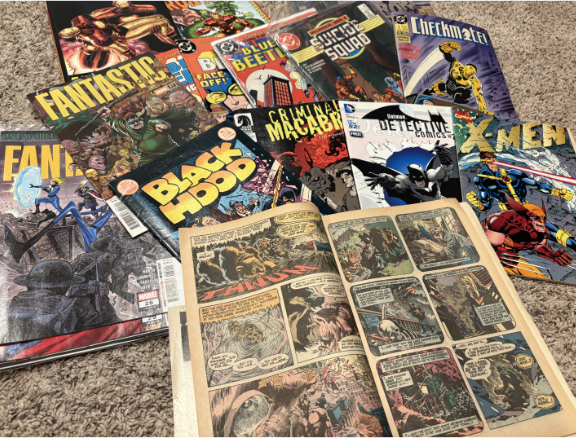
comics spread

Formats

Comic Books vs. Comic Strips

To begin with, comic books as we know them didn’t originate in their most ubiquitous form. At first, they arrive in the form of the comic strip. Comic strips and comic books share many features, but their format and form are rather distinct. Comic strips are featured in periodicals; traditionally, newspapers. While comic strips can feature overarching storylines, they tend to be focused on a single thought – often a joke which is set up early and paid off in the final panel. They can be dramatic as well as comedic, as evidenced by some classic adventure and mystery comic strips like Buz Sawyer, Terry and the Pirates, and Rip Kirby, but the format of a comic strip is largely the same across genres – a scene at most, and sometimes not even that.

Comic strips were often printed daily throughout the week in smaller iterations of the scene that was unfolding, with larger leaps in plot saved for broader spreads in Sunday editions of the newspaper, where a two-line strip would be offered more page space, sometimes even the entire page for the most popular syndicated titles.

Generally considered the first “comic strip,” was The Yellow Kid, whose first regular strip appeared in 1895. The primitive medium didn’t immediately take the form of a paneled strip, but was mostly composed as a large splash-page. Another sign of the burgeoning medium was the lack of word balloons. Instead, the Yellow Kid, depicted as a bald child with a ragged smile, would have his dialogue printed on across his overlarge yellow shirt.

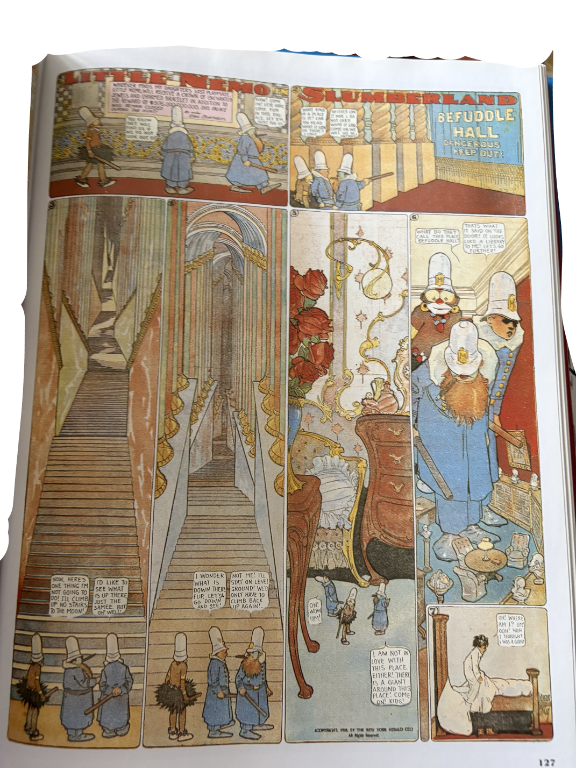
The Yellow Kid’s popularity soon gave rise to other pioneering efforts in the comic strip medium, mostly concerning either the poverty-stricken lifestyles of the teeming, melting-pot city, such as The Katzenjammer Kids or else completely surreal flights of fantasy, such as Little Nemo in Slumberland and Krazy Kat.

Little Nemo in Slumberland
Little Nemo in Slumberland began its run in 1905. (McKay, 2000)
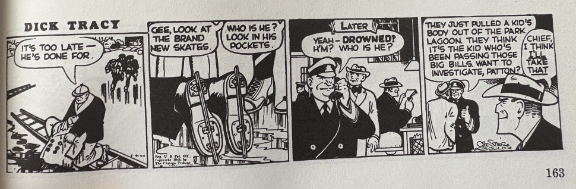
Dick Tracy
Dick Tracy by Chester Gould (Gould, 1990)
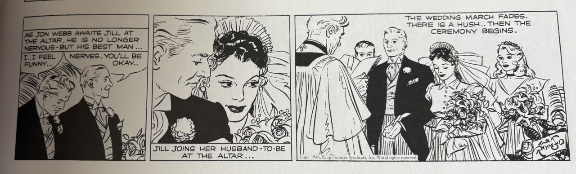
Rip Kirby
Rip Kirby by Alex Raymond (Raymond, Alex 2009)
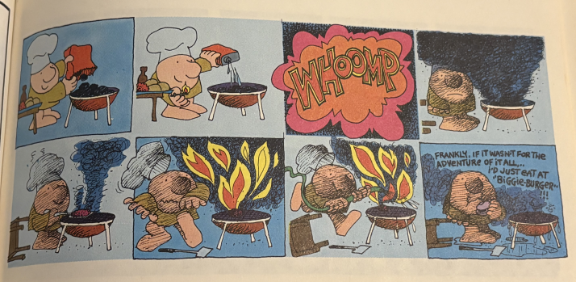
ziggy
Ziggy by Tom Wilson(Wilson, Tom, 1979)

Comic books, by contrast generally consist of longer narratives comprised of multiple scenes, and are published, in print media, in magazine format with glossy paper covers. They can consist of self-contained stories or chapters within a larger multi-issue story arc. The meteoric rise in popularity of comic books makes identifying the first true standalone “issue” difficult to trace, but by the early 1930s the comic book as we know it today was thriving.

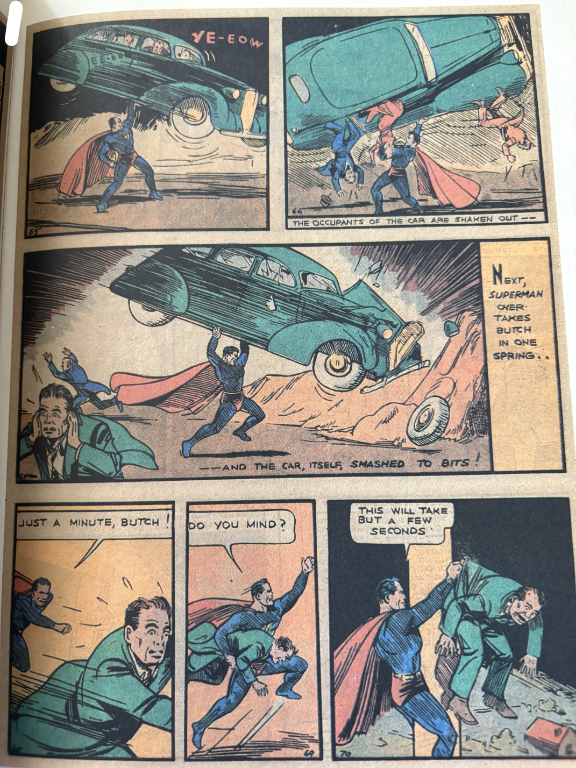
There is one particular comic book that has taken the mantle of “the one that launched the industry” to unscalable heights, however. This would be Action Comics issue #1, from 1938. This would introduce the world to the first true “superhero” as we still understand the concept today. While there had been other superheroes featured in comic books, on radio, and in pulp novels, the protagonist of Action Comics #1 would redefine the idea and set the template for generations to come, even to the present.

Superman
Superman in Action Comics, 1938 (Simon and Shuster, 1938)
Batman
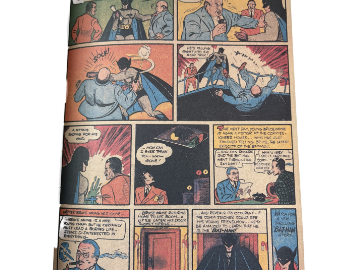
Batman in Detective Comics, 1939 (Kane and Finger, 1939)

The character was Superman. His first appearance would go on to usher in the Golden Age of Comics. But more on that in a bit.

Graphic Novels: Just a Comic Book, Except...Bigger?

One of the most popular outgrowths of the comic book medium today is the graphic novel. Like the debate over the comic strip versus the comic book, when compared to traditional comic books, the differences are subtle but significant. While graphic novels take the same general format as comic books, consisting of multipanel layouts, dialogue balloons, and a combination of dialogue text and imagery to tell the story, graphic novels are generally longer and self-contained. They can be broken up in chapter format or simply flow from one scene to the next, but the focus of the graphic novel is to tell a long story with complex character development that will be finished by the end of the book, a true emulation of the traditional novel using comic book vocabulary to tell the tale.


It wasn't until the 1980s that comic books started to become recognized in the mainstream as a true art form. In 1985, DC Comics' collected form of its 12-issue maxi-series Watchmen became the first graphic novel to be awarded the prestigious Hugo Award for best science fiction novel. But despite this elevation, the graphic novel medium still faced criticism from those accustomed to the printed word -- as evidenced by the fact that the Hugo Award committee changed the rules to ban comic books and graphic novels from eligibility the very next day after Watchmen took home the prize. The following year, however, saw Art Spiegelman's Maus become the first -- and, to this day, only -- graphic novel to be awarded the Pulitzer Prize for Literature.

Green Lantern
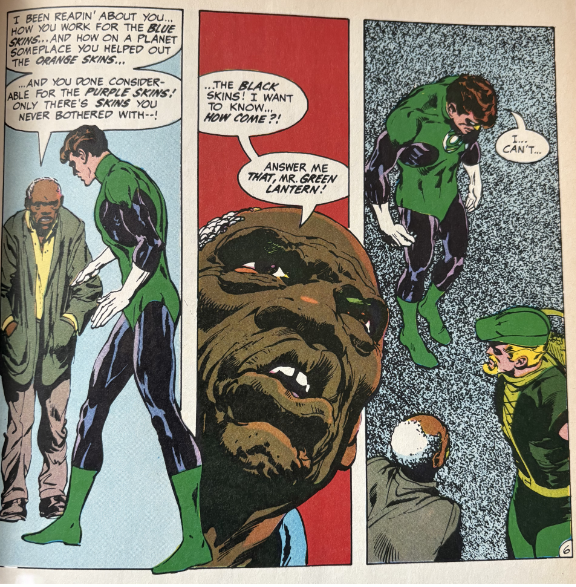
The Green Lantern is confronted by a more realistic social problem in the early 1970s than comics would have dared broach thirty years earlier. (O'Neil and Adams, 1970)

Manga, Manhwa, and Manhua

Throughout the 20th century and now a quarter of the way through the 21st, the influence of comic books have spread throughout the world and shaped a huge part of global pop culture. With this influence, different countries have adopted the medium and transformed it by weaving it into the fabric of their own culture.

Manga is a form of comic book/graphic novel from Japan. Featuring characters drawn in a broad, characteristic style with trademark large eyes and purposefully-disproportionate features, manga itself has had an influence on artists of all cultures and backgrounds. Manga are published in black-and-white and often feature sparse dialogue and a longer page count than their western counterpart, the comic book.

Manhwa is a Korean variation of comic books and comic strips, mostly published in color and on the internet as webtoons.

Manhua are Chinese comic books, published in full color, in traditional print format. Each of the aforementioned Asian variations on the comic book form have been used to tell stories across all genres, from the melodramatic to intimate, real-world-based character studies and dramas.

The European Comic Book

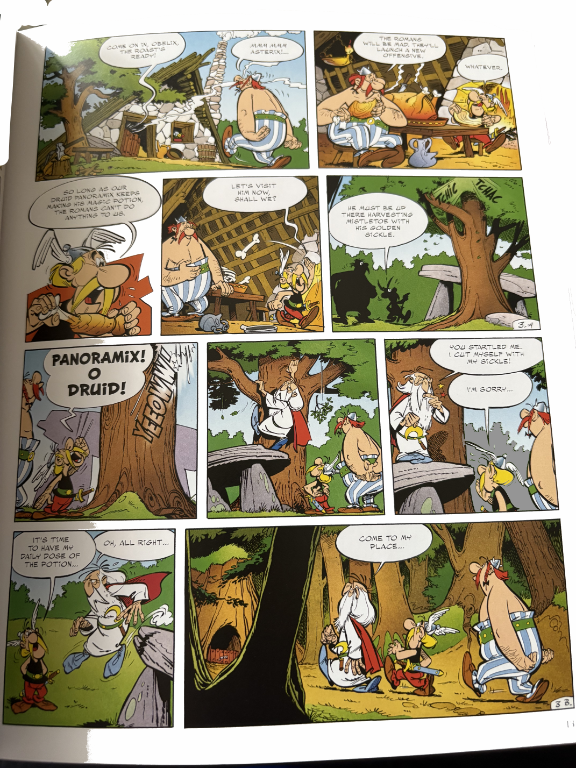
The comic book medium achieved mainstream literary status fairly early in its development. By the late-1950s, characters such as France's Asterix the Gaul by Rene Goscinny and Belgium's Tintin by Herge had become cultural icons. By the late 1960s, Italy's Corto Maltese by Hugo Pratt and France's Blueberry by Giraud and Charlier had joined these and other characters to become as iconic across Europe as Superman and Mickey Mouse were in the US.

Asterix
Asterix the Gaul (Goscinny and Uderzo, 1961) continues to be one of France's most popular characters today.

Whereas for nearly half a century comic books were considered synonymous with children and superheroes in the US, in Europe different genres became popular, such as the Western and visionary science fiction. In fact, European countries as a whole largely eschewed the concept of superheroes, instead focusing on human interest stories. Comics were written for adult audiences, with extreme sexual content and violence featured in titles such as the science fiction anthology magazine Metal Hurlant. Along with this focus on adult audiences, artists and writers were given the opportunity to explore more complex characters and themes than mainstream American comics.

To this day, European comics hold a position alongside the classical art forms and are embedded in cultures across the continent.

X

Try It Out!

Hover over the circles to read about each phase in comics' history!

Tap on the circles to read about each phase in comics' history!

History

What's This?

The Golden Age
1938-1956

The Golden Age of comics was a period where comics publications flourished in popularity, both in newspaper strip format and in comic magazines. New superhero characters sprung up weekly, and children struggling through the hardships of the Great Depression and World War II ate them up.

Escapism was the focus of these fantastic tales, but also propaganda. Comics afforded a unique opportunity for the US government to keep the young public hopeful while their fathers were serving overseas. Advertisements for war bonds appeared throughout most of the wartime comics. Villains, even of the supervillain variety, usually had ties to Nazi Germany or Imperial Japan. And superheroes such as Captain America captivated the imagination while selling the idea of American heroism and perserverence.

The Silver Age
1956-1970

While the Golden Age saw the invention of a multitude of superheroes, comic books didn't achieve depth and iconic status until the Silver Age. This was a period where comics characters were solidified and carefully written, and where artists refined their styles to a point where the artists became as popular as their characters.

Many of the most famous comics characters today were either created or reenvisioned during the Silver Age. At Marvel Comics, Stan Lee and his main artist Jack Kirby resurrected and repurposed Kirby's 1940s-era character Captain America, while also creating The Fantastic Four, the Avengers, Iron Man, Thor, the X-Men, and the Incredible Hulk. Lee and revered artist Steve Ditko, meanwhile, created Spider-Man and Doctor Strange.

Marvel's competitor DC had a whole lineup of characters that had originated during the Golden Age which were now finding new audiences and more interesting stories. Superman, Batman, Wonder Woman, the Flash, and Green Lantern were reimagined and placed into culturally relevant situations throughout the social upheaval of the 1960s.


Comics had become cemented as a medium for the ages.

The Bronze Age
1970-1985

Marvel and DC saw changes in their staff as artists and writers departed to become freelancers during the Bronze Age. A new generation of artists and writers sprang up under the tuteledge of the previous decade's writers, now editors, to bring their superheroes to an audience that had grown accustomed to greater complexity.

By the mid-1980s, independent publishing companies sprang up with enough sales to stand as competitors to the Marvel/DC powerhouse. Graphic novels started to develop and find more adult audiences. Moral ambiguity and violence became major themes in comics. A sense of grittiness and edginess had found its way into what once was considered a medium only reserved for children.

The Modern Age
1985-present

Comics today run a gamut of subjects, from superhero mainstay titles to more adult-oriented comics. A ratings system has been developed to ensure small children aren't subject to some of the more extreme content in comics and graphic novels. This said, it's important to note that mainstream comics are still largely geared to general audiences, albeit with a target audience of pre-teens and teens.

Modern comics don't fit neatly into any box. There are comics for all types of readers -- educational comics, classical adaptations, original mature graphic novels, superhero adventures, family dramas, mystery and suspense thrillers, and gut-busting comedies.

Comics have found success in the movies, which has brought more attention and new generations of readers to the medium that started it all.
How to Read a Comic

Comics can be a bit daunting to new readers, especially since they've largely gravitated away from simple panel-by-panel formats. But the basic vocabulary stills applies. Here are some common elements of comics format.

The "Splash Page"

splash page
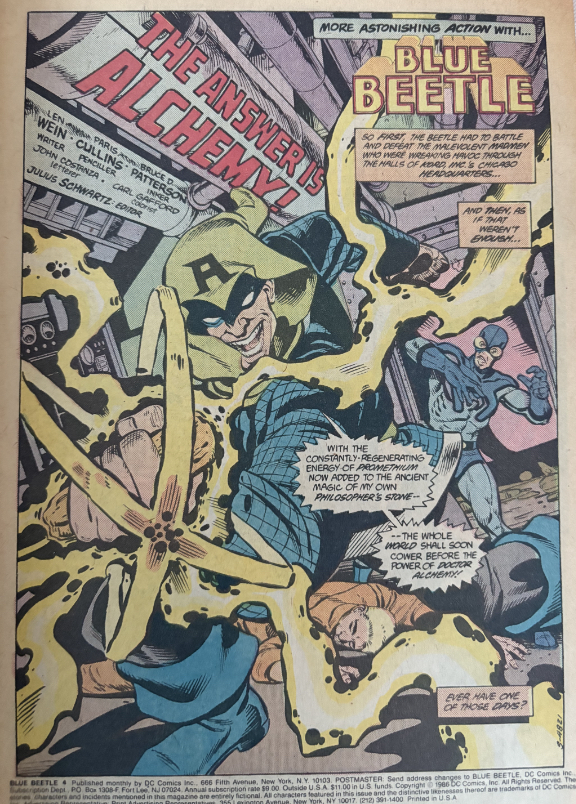
Typical comic book splashpage format (Wein and Cullen, 1986)
double-page spread
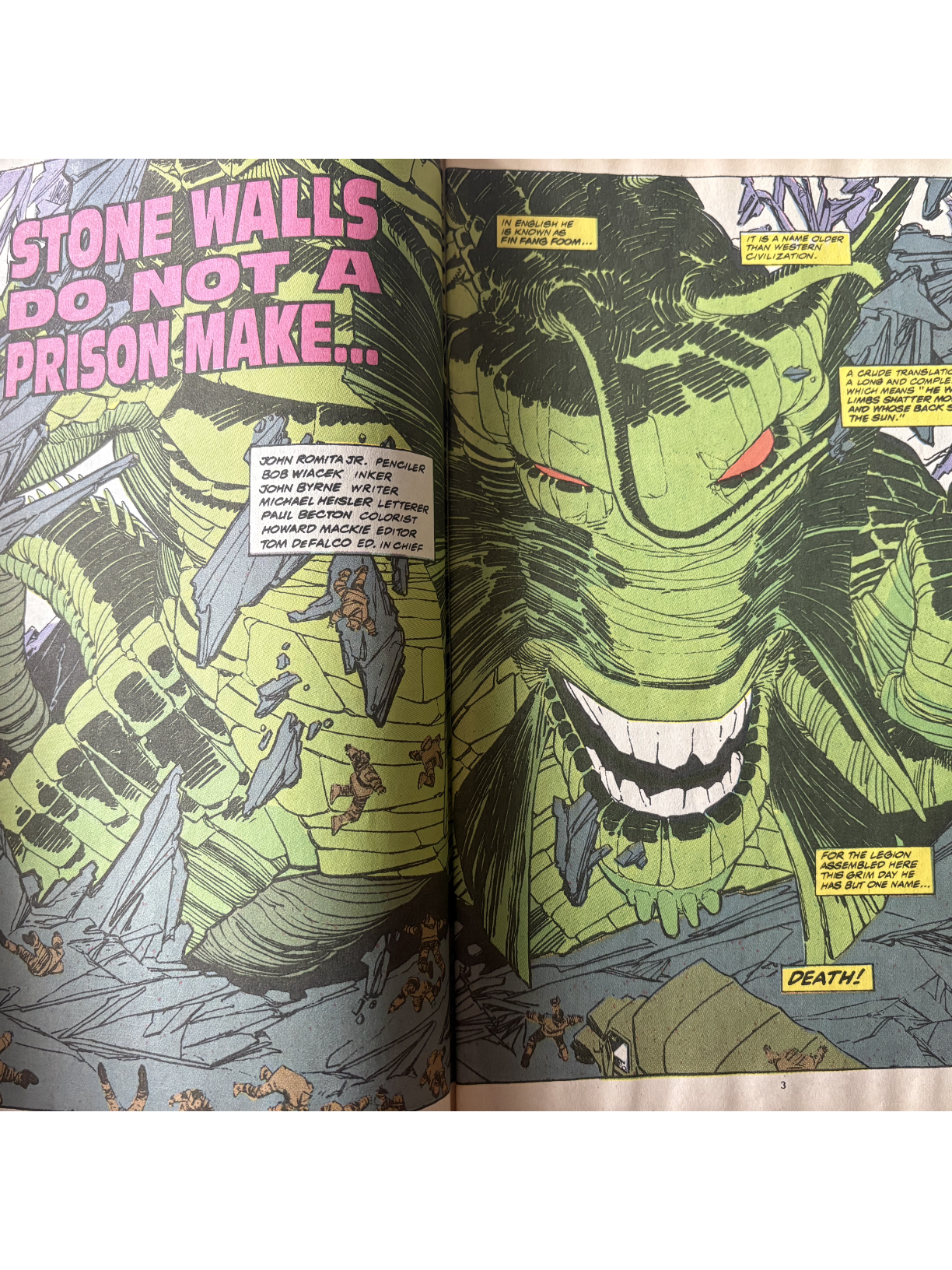
A double-page spread splash page (Byrne and Romita, 1990)

Comics, regardless of genre, usually open with some form of a full-page, high-energy scene designed to provide the major hook of the story. This is referred to as a splash page. It often functions the same way a main titles sequence in a movie, showcasing the title and listing the creators.

Panels

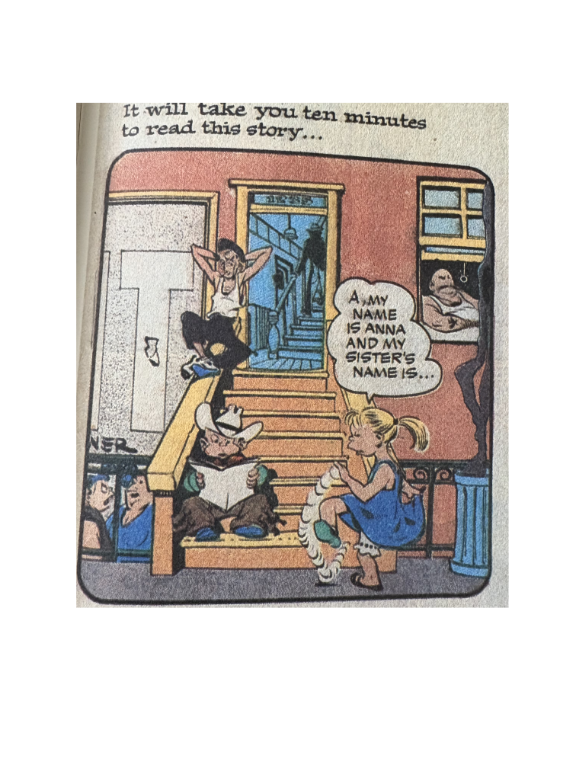
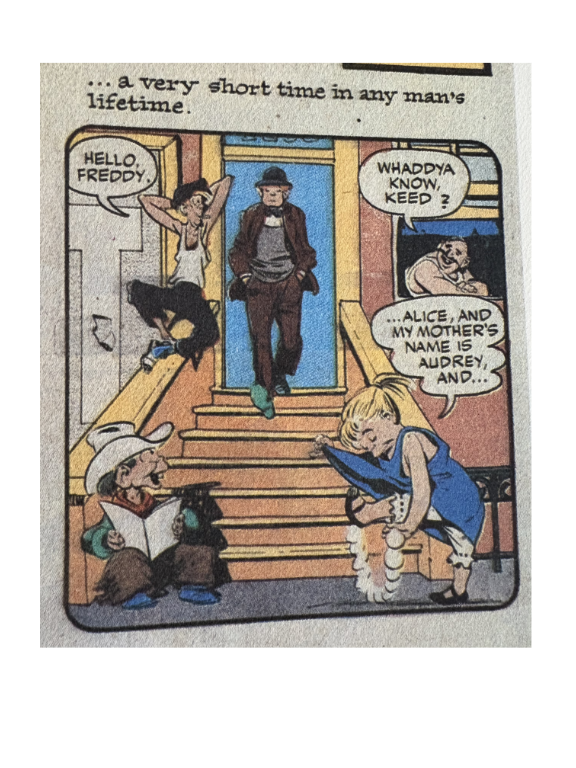
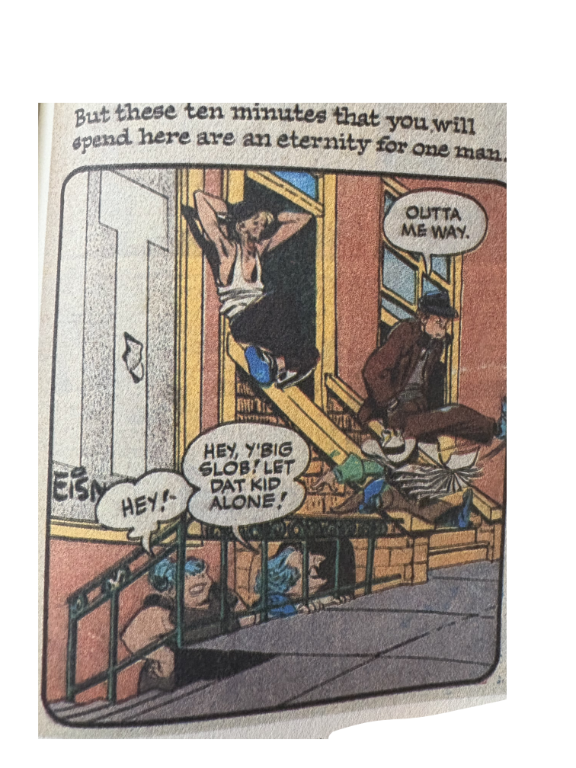
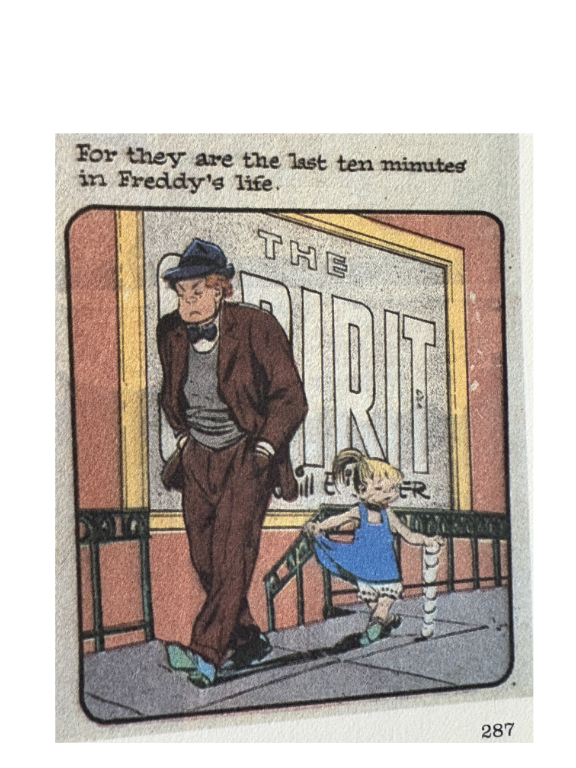
Stories unfold in a series of pictures and words called panels. Each image displays a moment of a scene, with the cumulative effect feeling like a single story similar to a movie, although with the added element of dialogue and descriptions.

panel from the Spirit panel from the Spirit panel from the Spirit panel from the Spirit
Panels are laid out so as to draw the eye and create a flow of movement from one panel to the next.(Eisner, 1948)

Word and Thought Balloons

To indicate spoken dialogue, word balloons are often employed. These are oval containers holding the spoken text with a small point to indicate which character in the illustration is speaking. For unspoken text, such as the thoughts of a character in a third-person narrative, thought balloons, cloud-like shapes that hold the words. In recent comics, thought balloons have largely been phased out in favor of text boxes to indicate characters' thoughts. To distinguish between character's thoughts, the boxes are sometimes coded with a consistent color or with some sort of icon to keep clear whose text belongs to whom.

Text boxes are also used to indicate narration.

Panel Layout

Western comics -- American, European, etc. -- read from right-to-left, starting from the top right and proceeding left and down.

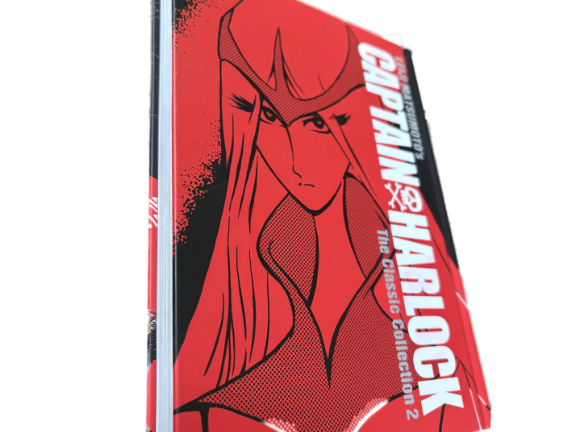
Eastern comics, however, such manga, manhua, and manhwa, which have exploded in popularity in the US during the past decade, are usually published to reflect their native layout, even when translated into English. The books are designed to open from what Western readers would typically considered the back of the book and the panels are to be read from left-to-right starting with the top left panel.

manga book
A typical manga book, designed to open in reverse of what Western readers may be used to (Matsumoto, 1977)
Western comics read left-to-right
Eastern comics read right-to-left

STOP DR. OBLIVION!!!!

Now that you're well-versed in comics, we have a mission for you! Dr. Oblivion has unleashed a torrent of radioactive Necrobombs over New Utopia City! Pop them all to save the city!

Epilogue

Comic books are a truly American creation whose influence has expanded globally and found new roots in cultures across the world. Characters and art styles have taken on iconic places in pop culture and their influence can be felt across different media, with television and movies, books, and even music displaying inspiration directly from comic books.

Next time you hold a comic book in your hands, take a moment to think of its significance, and the road this medium took to becoming one of the major forms of entertainment today.

If you'd like to know more about the process of creating this website, please check out my production journal.

Top