Card Games

Playing Cards

A Time-Honored Tradition


Card games have been played for centuries, across different countries and cultures. Playing cards come in many different arrangements and decks, and can be ornately-designed or simple in layout. The standard 52-card deck is the most common and has been used for a wide variety of games.

The three listed below barely scratch the surface of games that can be played with a simple deck consisting of four suits, numbered one through ten with three face cards and an ace. But these three games are easy to learn and serve as a great entry into the world of card games.

Solitaire

Solitaire is a classic solo game. The sole player shuffles the deck and sets one card face up, then continues the row with six more facedown cards. The next row begins by laying a card face-up on the second column from left, followed by five facedown cards. Then the third row starts by laying a card face-up on the third column from left, and so on until the seventh cool from left receives a face-up card.

solitaire

To begin the game, the player draws three cards off the remaining deck and looks at the third card. If it has the numerical value less than one of the face-up cards AND the colors alternate—meaning a red suit would follow a black suit or vice versa—the player places the card on that column.

If there are any columns whose top card would fit the descending numerical value and alternating suit of another column, the face up cards can be moved to the appropriate column. The exposed face down card on that column would then be turned over and will be in play going forward.

Once all possibilities have been exhausted, the player draws another three cards and looks to see if the new bottom card will fit on any of the columns. At the end of the deck, the player draws another three off the top without shuffling. The shifting of the deck due to playing the last round provides the player with a different set of cards. When these stall out, the player can eventually draw one card at a time.

Play ends in a win when all cards in the columns are all overturned. Play ends in a loss when there are no more moves and Some cards remain facedown.

Poker

Poker is a time-honored game, most dynamically played with an element of gambling. The rules are complex but revolve around the value of different pairings of certain cards, with the values of different hands escalating. Players then use gambling to bet on whether they think their hand ranks higher than their opponents’.

To use a simple version of poker, Five Card Draw, as an example, gameplay works as follows:

One player is the dealer, who refrains from entering the round or perhaps the entire game. The dealer deals each player five cards, which the player is allowed to look at but which must be kept hidden from the dealer and the other players.

Players then have the opportunity to trade a certain number of cards back to the dealer in exchange for new cards. After this round, moving clockwise around the table, the players decide whether to drop out of the round without displaying their cards—called “folding.” If a player folds, they forfeit anything they have bet on the hand thus far. Alternately, the players can “call,” in which they display their hands and force their opponents to do likewise. A third action is to “raise,” in which the player, in either a display of confidence in their own hand or in a bluff to seem that they have such confidence, bets a higher amount on their hand. This forces the other remaining players to decide again whether to fold, call, or raise the stakes even higher.
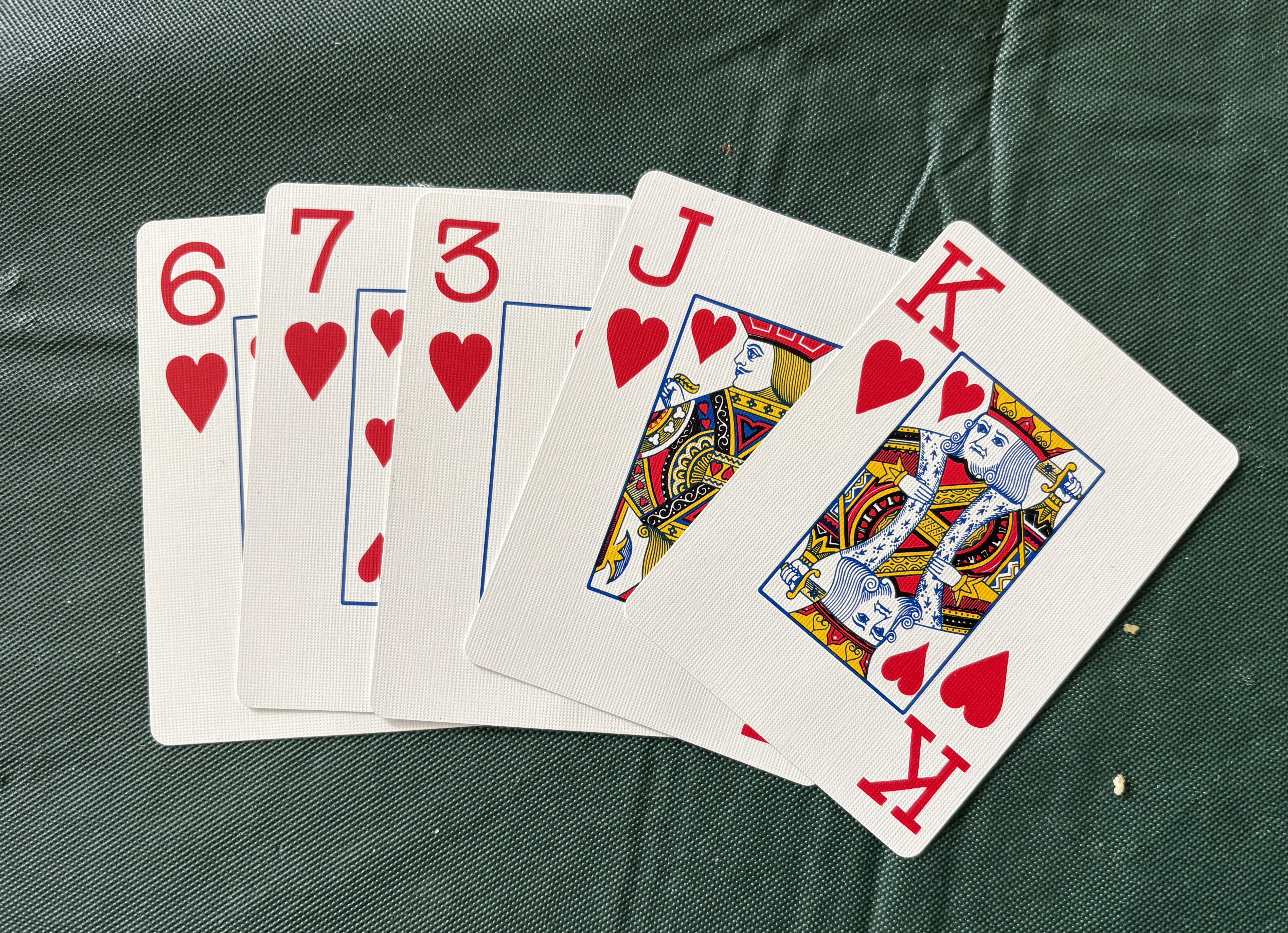
Five Card Draw is only one variation of poker. Several others are also played using the same value system but different rules. You can find out more about them here.

The values are card arrangements in descending value order are as follows:

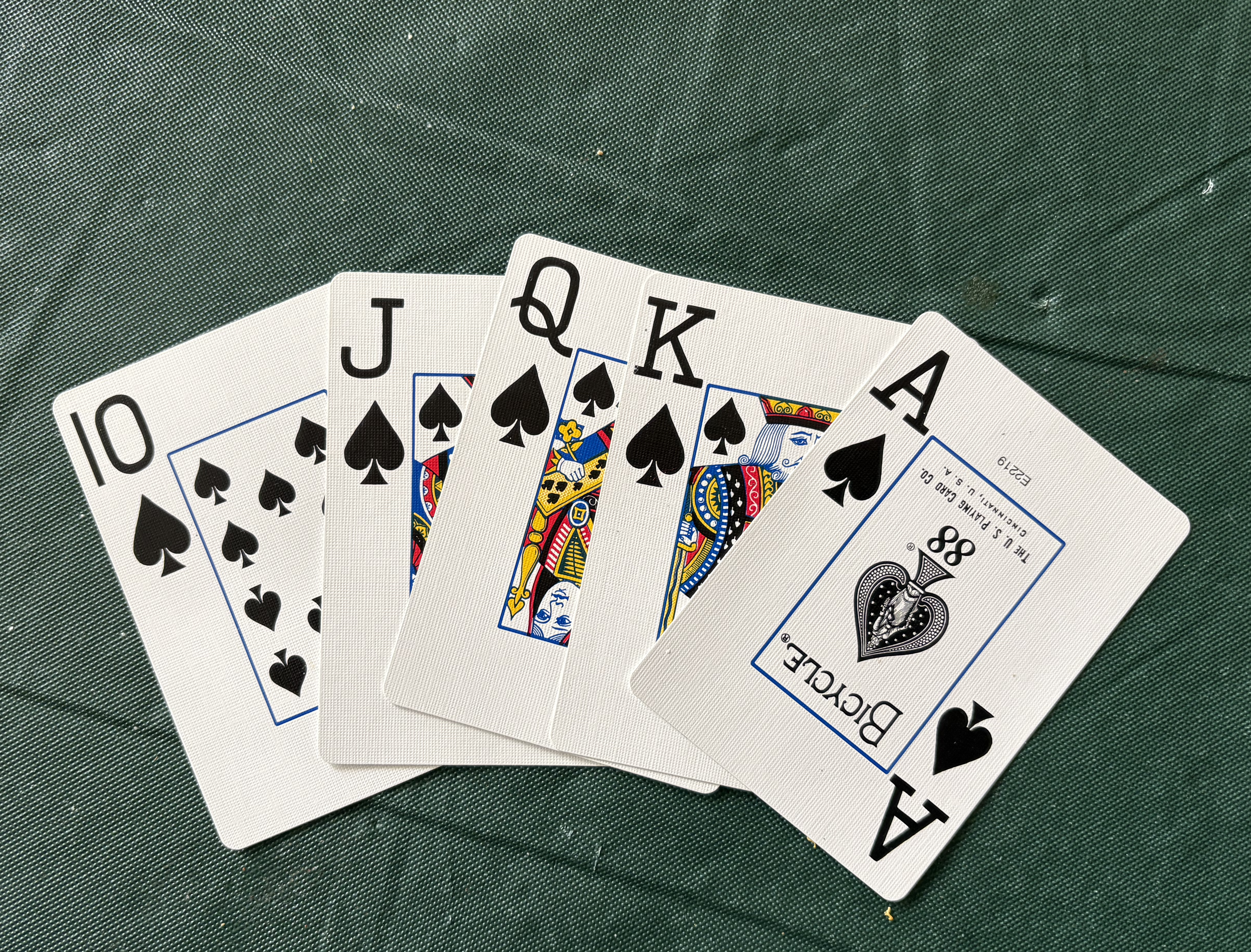
  • Royal Flush
  • Straight flush
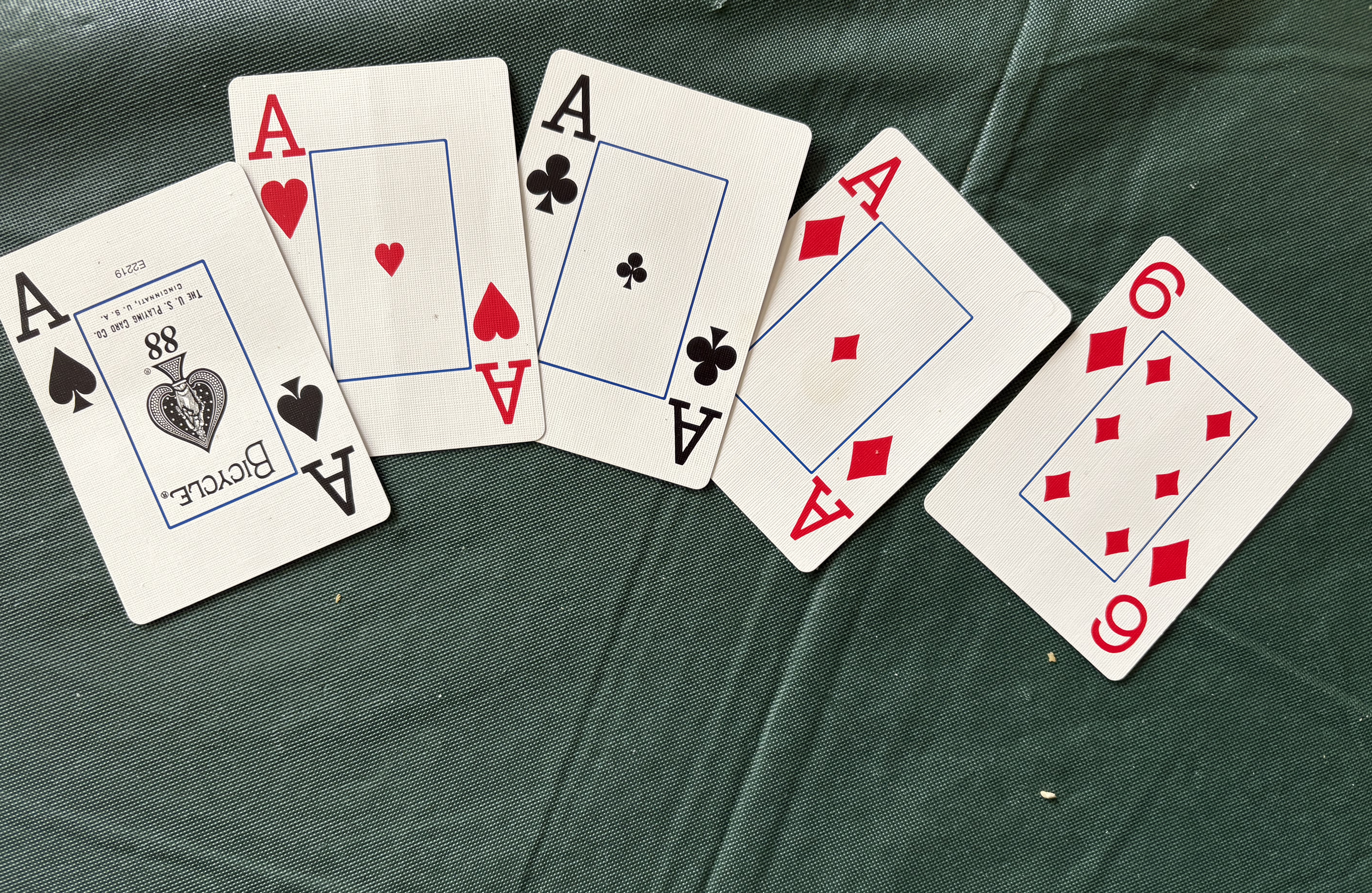
  • Four of a kind
  • Full house
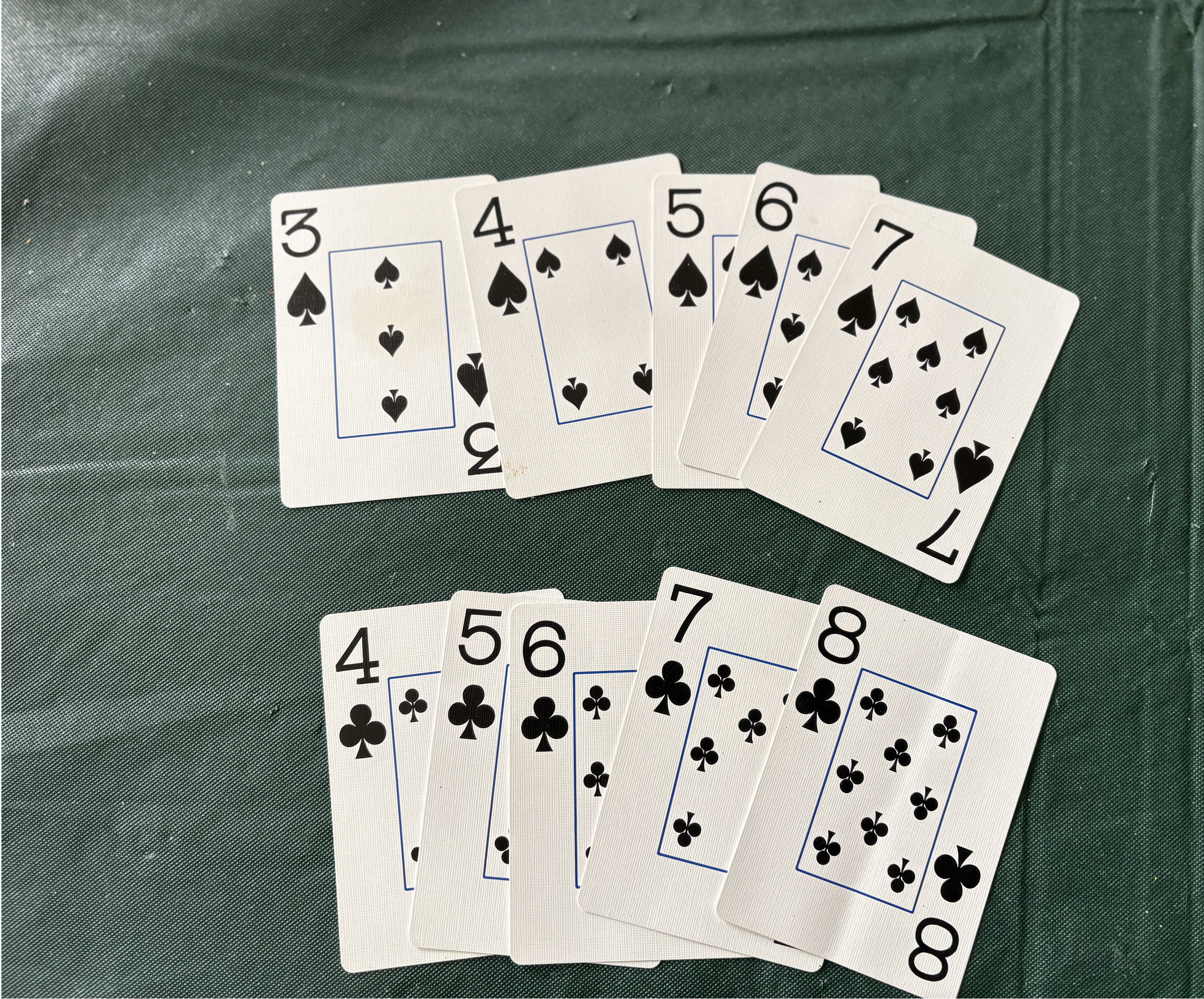
  • Flush
  • Straight
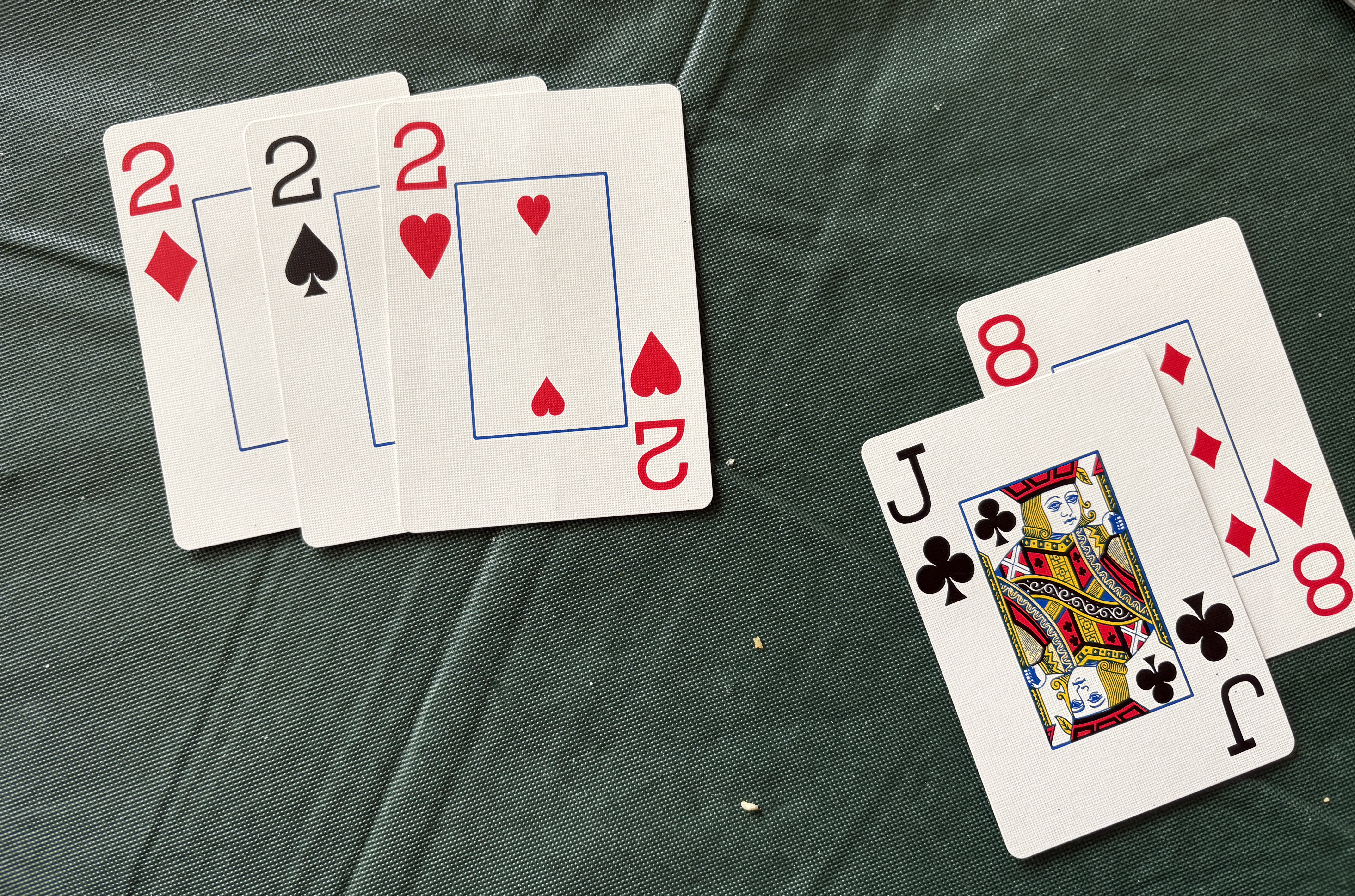
  • Three of a kind
  • Two pair
  • One pair
flush
Flush
straightflush
Straight Flush
royal flush
Royal Flush
three of a kind
Three of a Kind
four of a kind
Four of a Kind

Blackjack

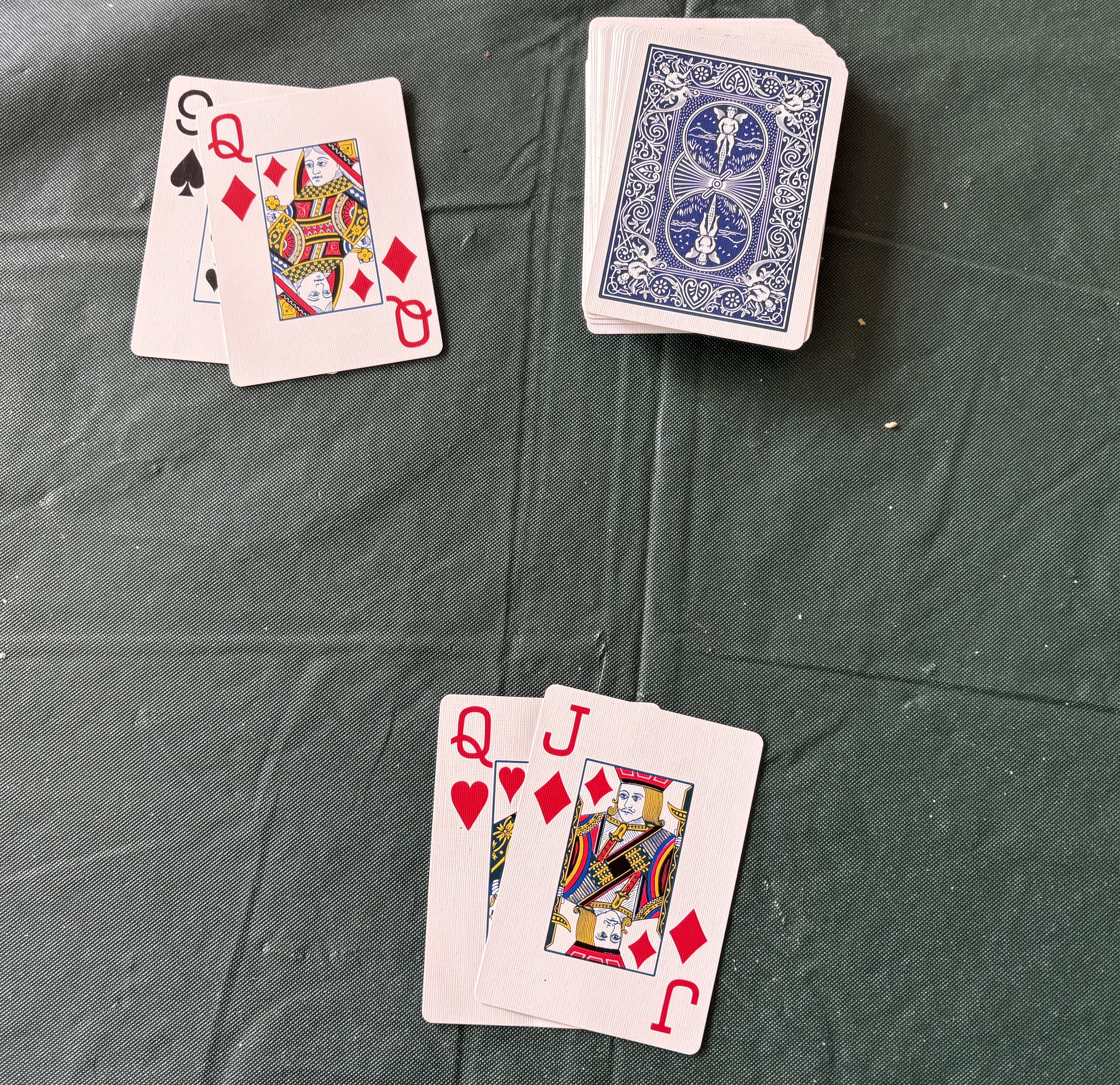
Blackjack, or 21, is a game in which all players play against the dealer rather than against each other. The object of the game is to get as close to a total value of 21 without going over.

Players are dealt two cards face-up. The dealer also deals themselves two cards. Players can choose to “hit”—meaning be dealt another card—or “stand,” meaning no additional cards. The object is to get a hand as close to 21 without going over and beating the dealer’s hand.

Card values are the numerical value of cards 2-10, with the face cards counting as ten each, and an ace serving as either a one or eleven depending on how they can best serve the hand.

blackjack