Markers
Markers are a newer addition to the professional illustrator’s toolbox, due mainly because printing methods have advanced significantly in the last twenty years.
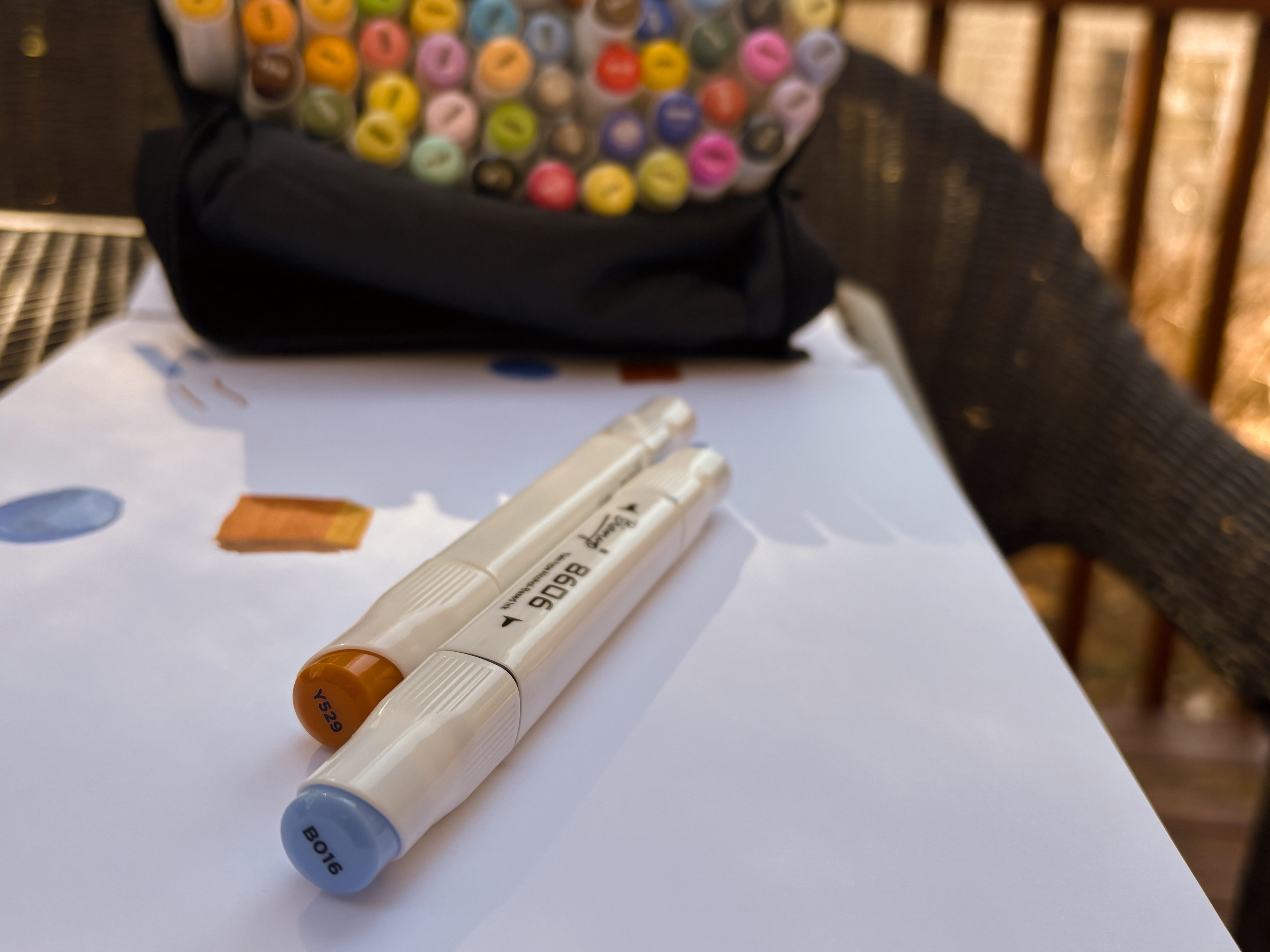
Previously, markers would have been insufficient for accurate reproduction, but thanks to digital printing methods, a set of markers is now available as a drawing or coloring tool.
There are different types of markers available at low costs. Water-based pigment markers offer an alternative to watercolor paint with the ability to create sharper lines. Their transparency allows them to work well with ink drawings.
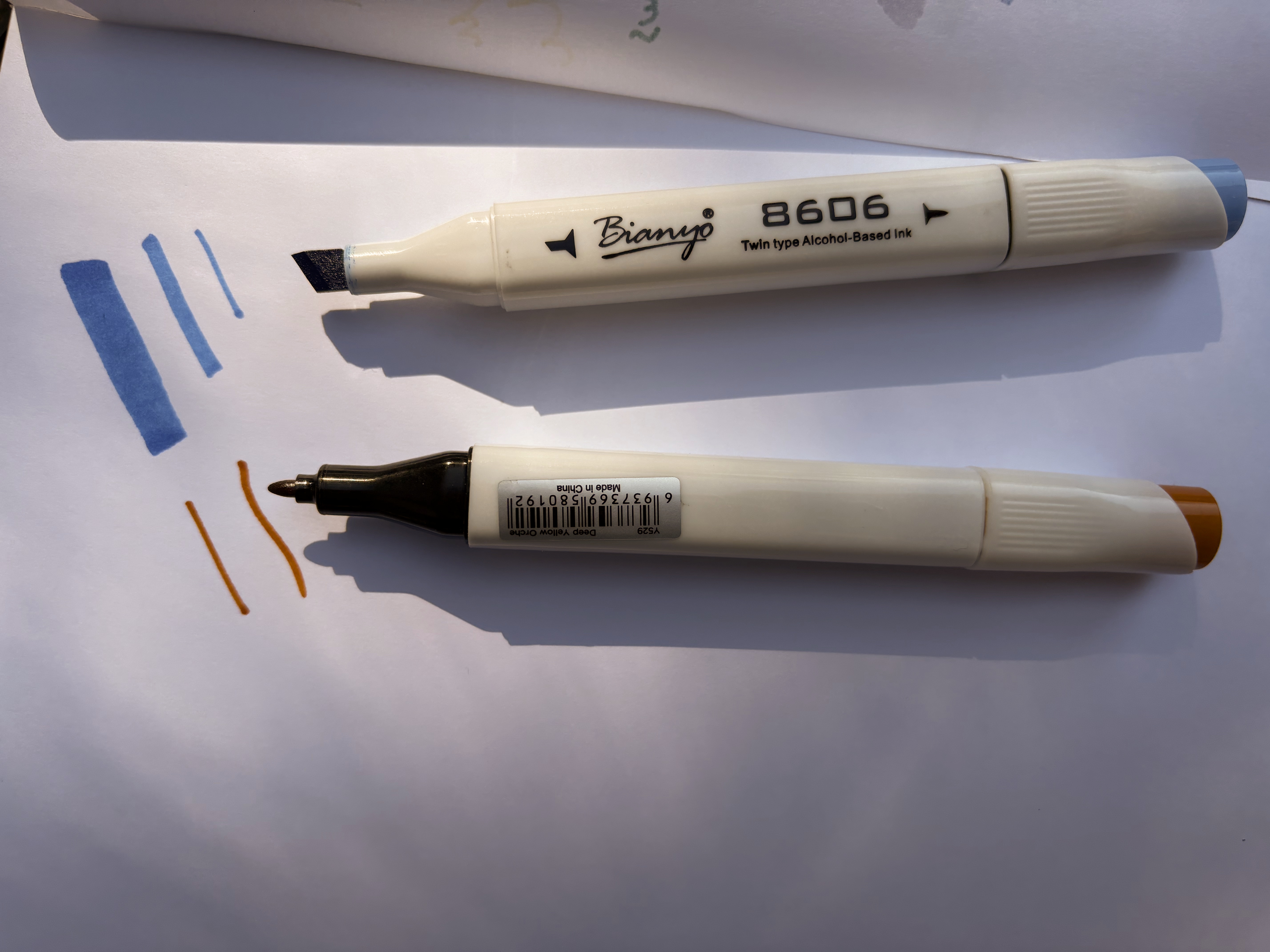
But the most prevalent type of marker in illustration currently is alcohol-based ink markers. These markers come in a remarkable range of colors, and their translucency enables blending and layering of colors to accurately represent photorealistic shading.
Techniques
Some common marker techniques:
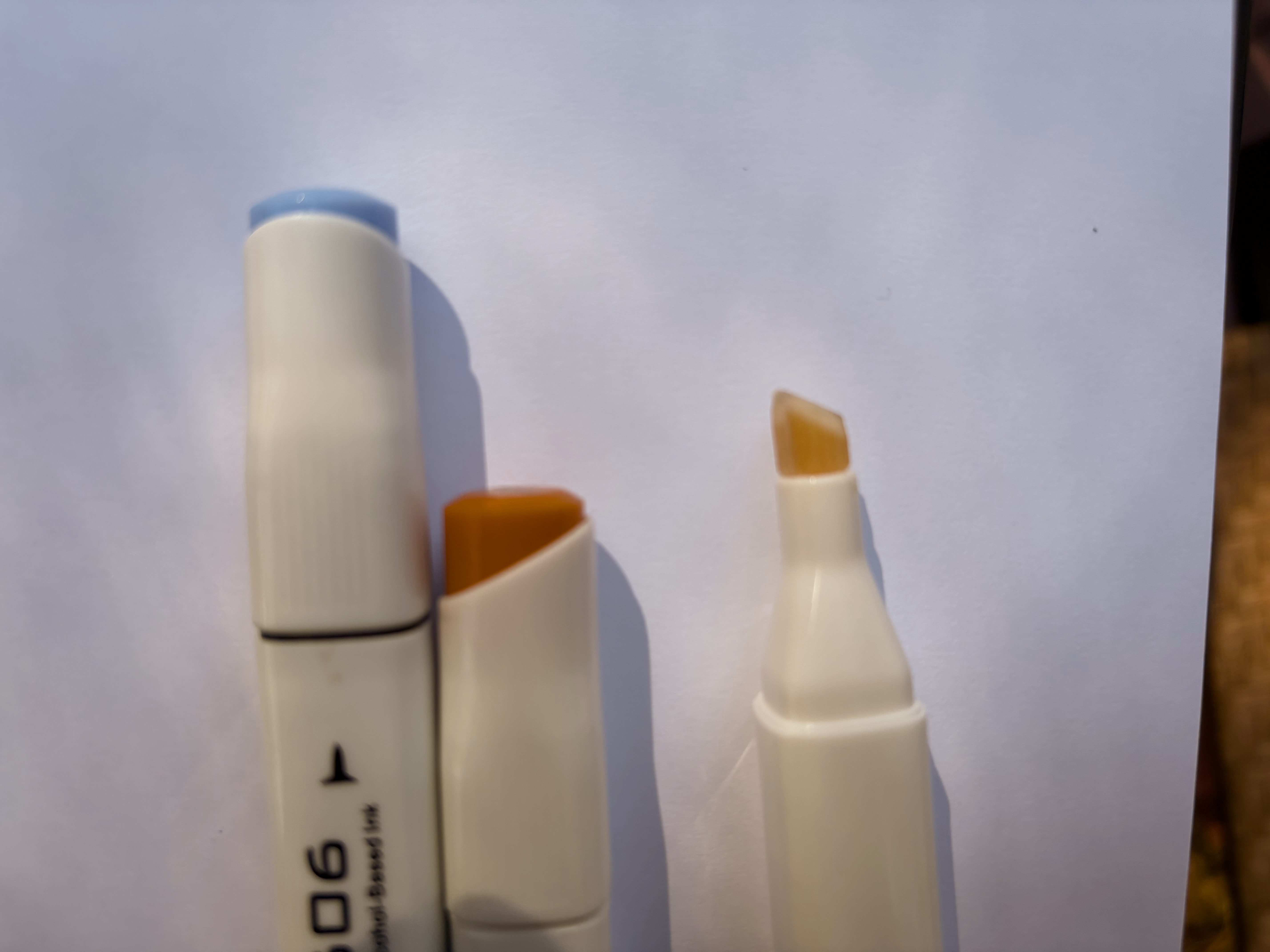
Alcohol markers come with several nib or tip styles. Bullet tips create fiber lines excellent for drawing or for filling in small spaces. Chisel tips are excellent for covering large areas quickly and for layering, which will create a variance between the lightest and darkest tone of a given hue. Some brands even come as brush tips, in which standard brush techniques can be utilized in drawing and coloring.
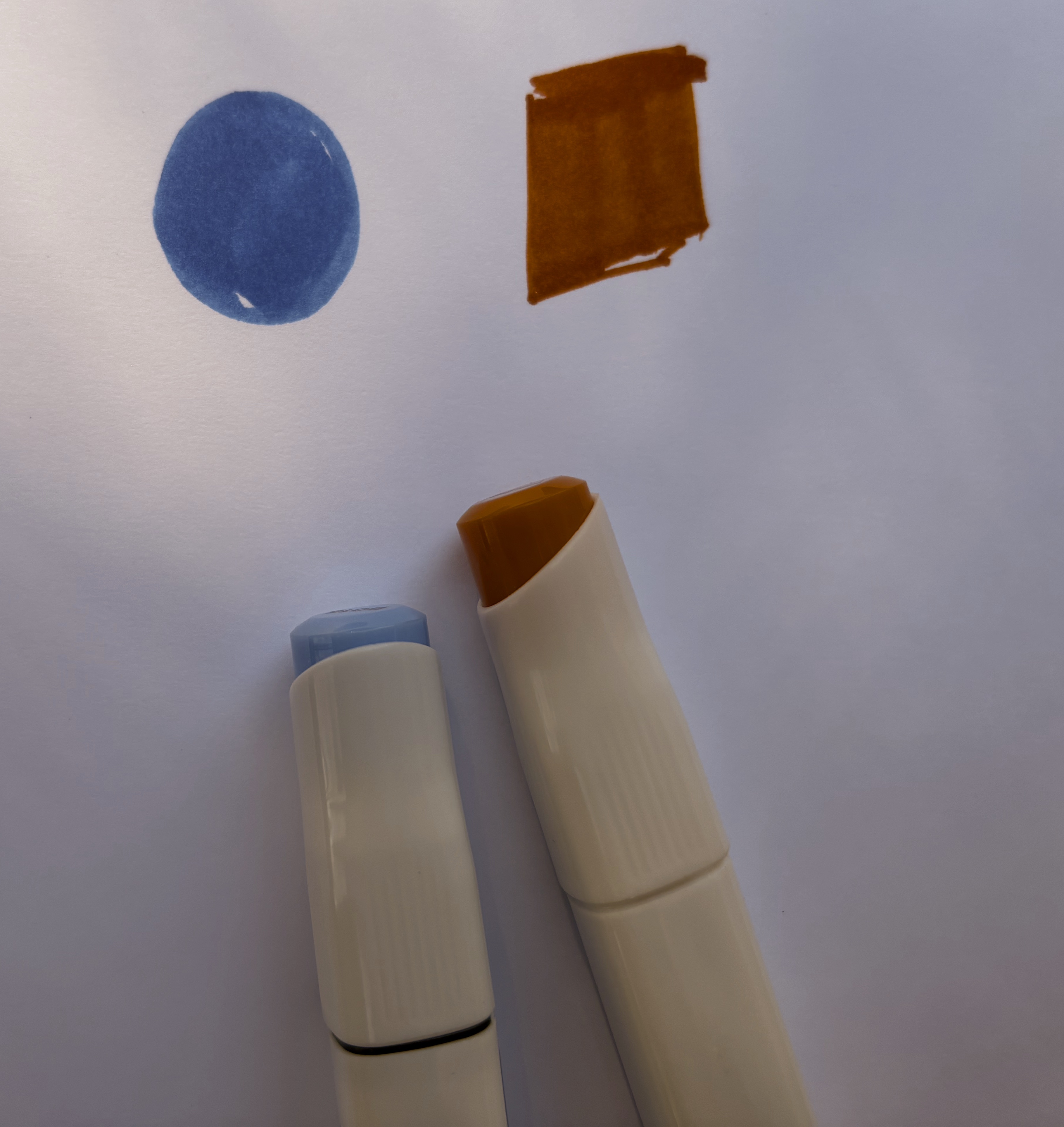
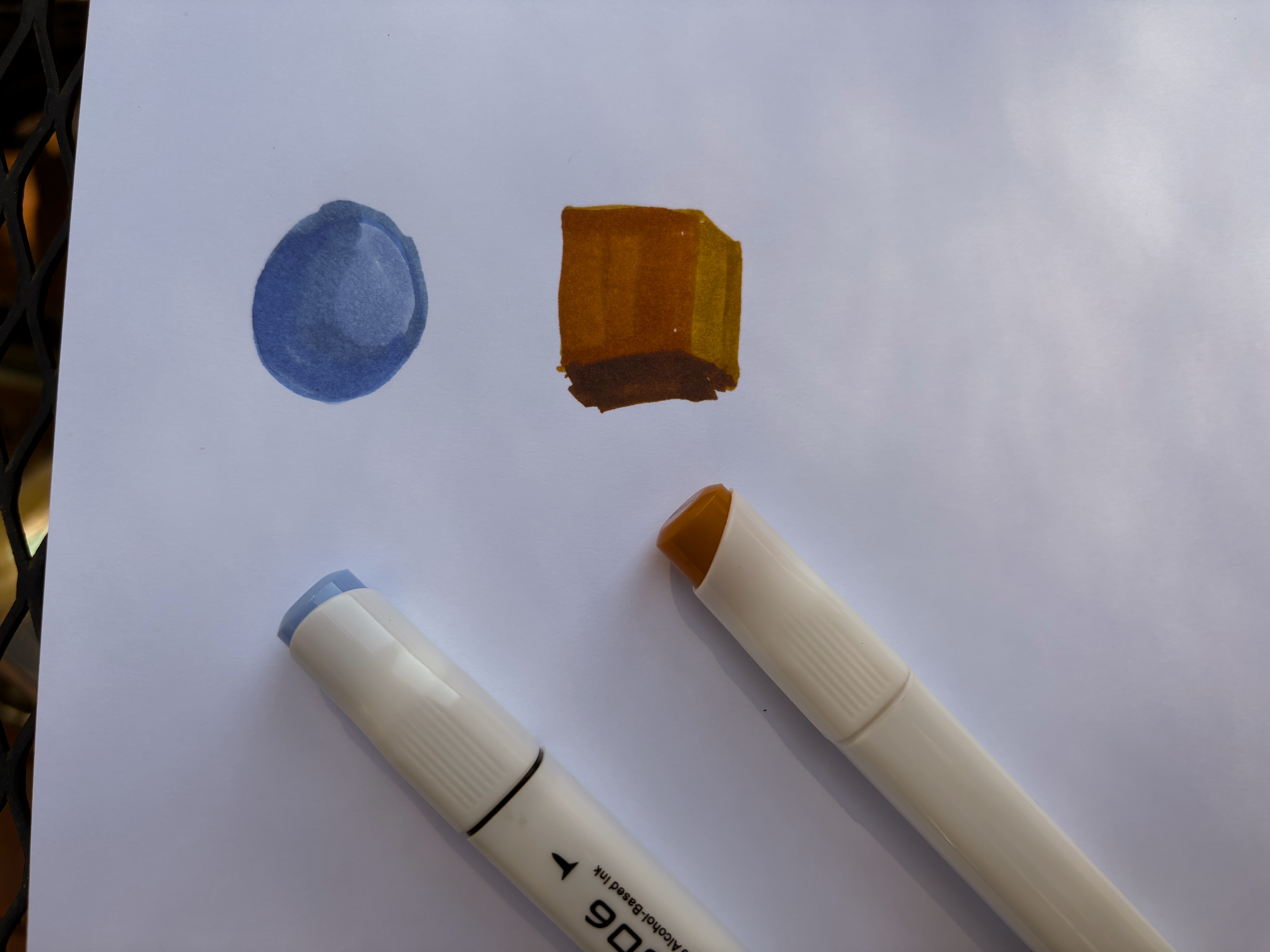
Alcohol markers can lay down an excellent, consistent flat color which is perfect for illustrations in children’s books and some comics. For a more complex effect, they can be blended to create a seamless gradient for three-dimensional rendering.
One of the most interesting tools for alcohol markers is the addition of a colorless blender marker whose sole purpose is to smooth out and blend the seam between two different shades, making blending a process unto itself.