Pen and Ink
Pen and ink is one of the oldest and most traditional methods of illustration.
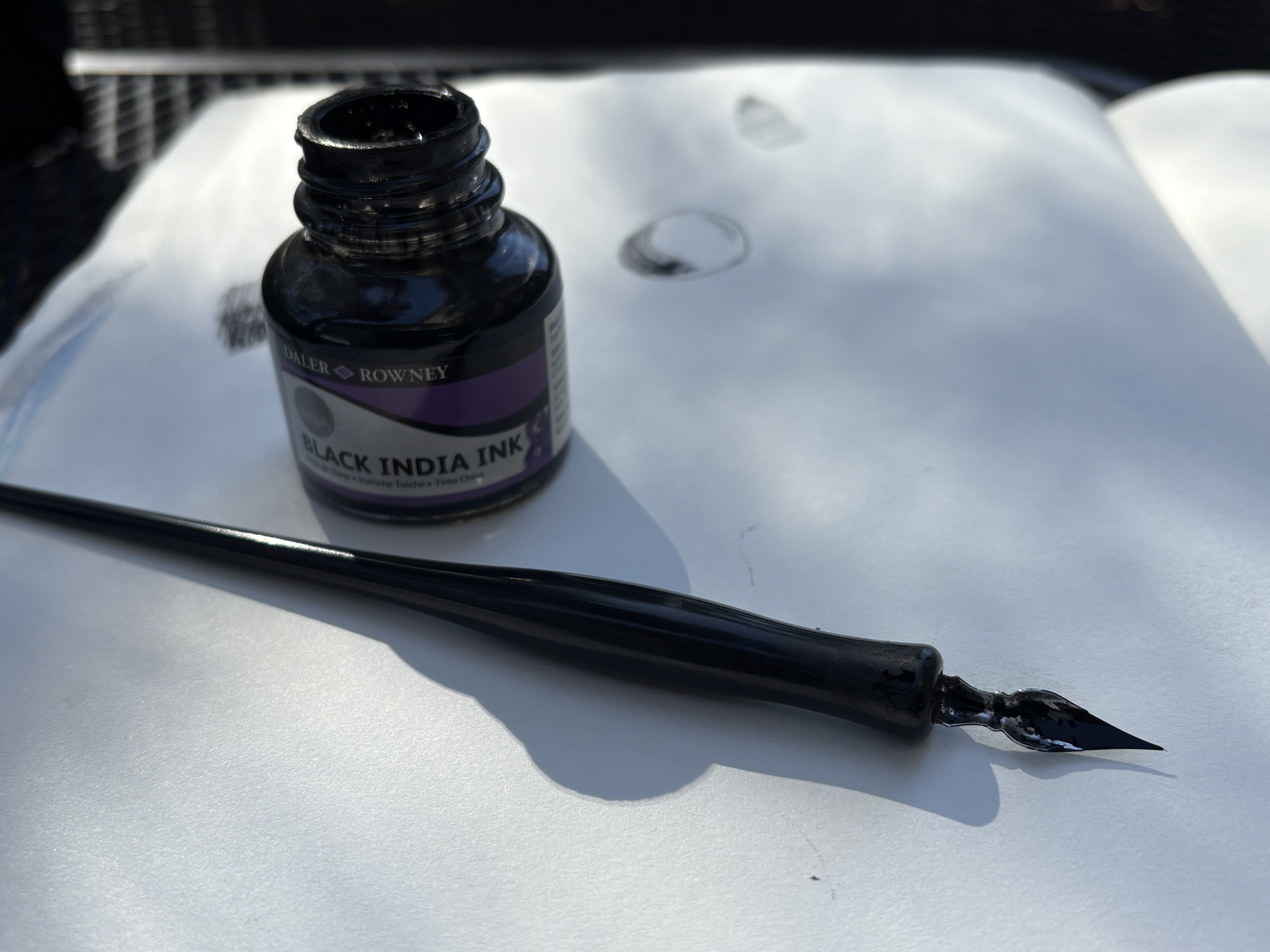
It has been adapted to library artwork to comic books and children’s books. The basic tools for pen and ink are a dip pen, which usually can be purchased with several
different options of nibs.
The preferred ink of publishing houses is waterproof India ink. The waterproof nature is important, as this can allow for the use of watercolor paint over the drawn lines.
Techniques
Some common pen and ink techniques:
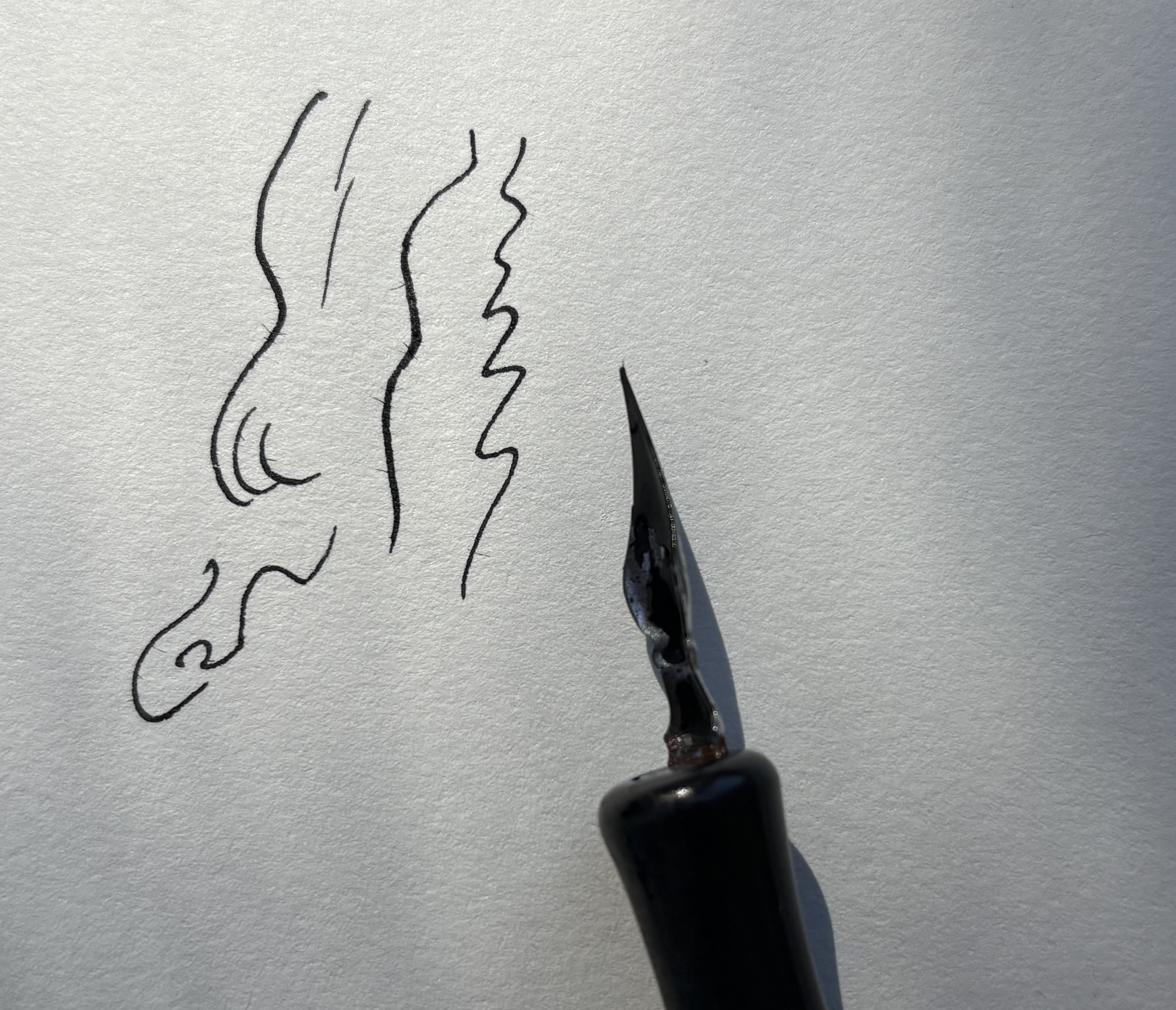
There are several techniques for illustrating in pen and ink. Clean line is a technique wherein the line weight doesn’t vary much from foreground to background, giving the illusion of great depth in a picture. No shading is added to the lines, which is how the “clean” label came about.
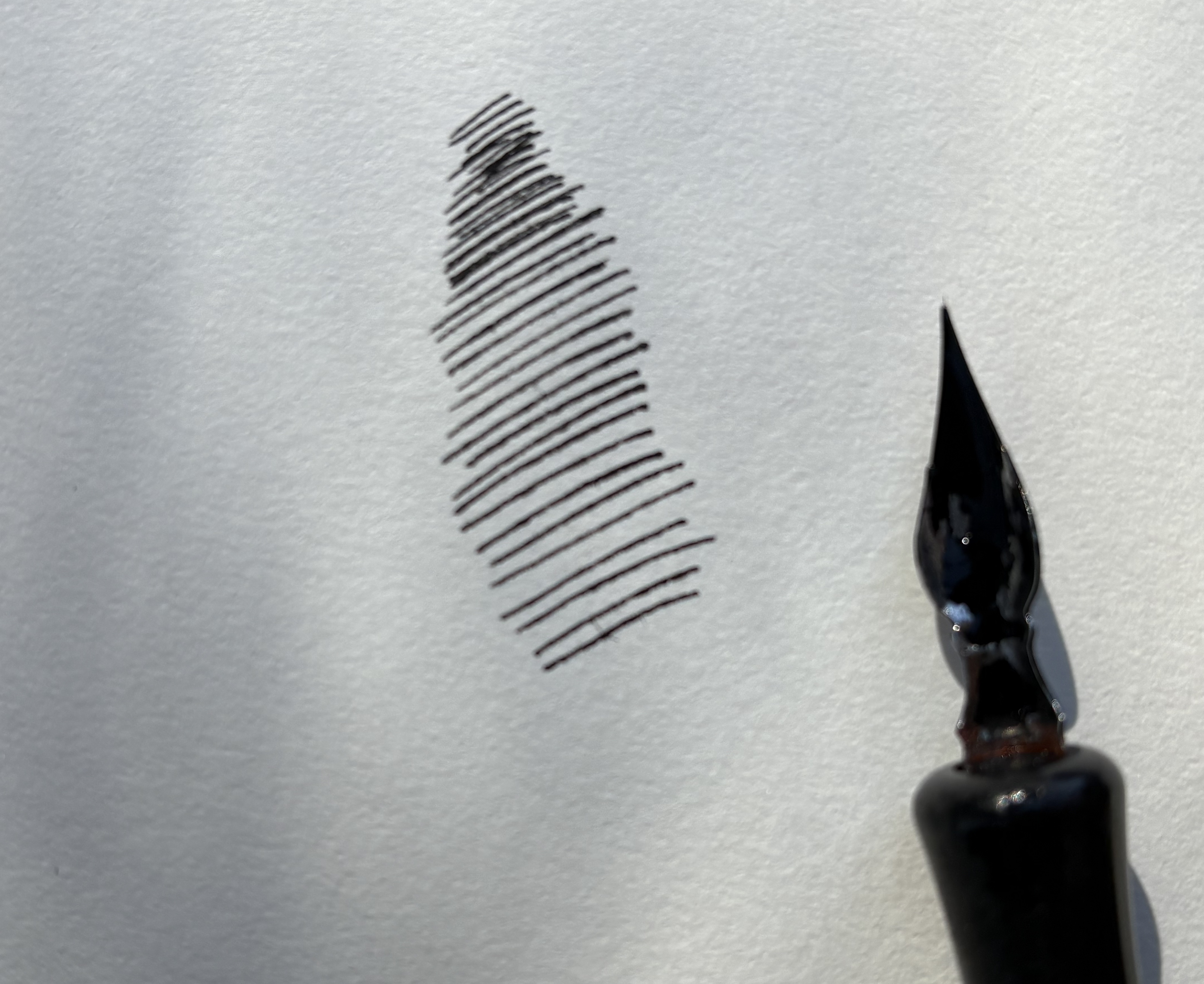
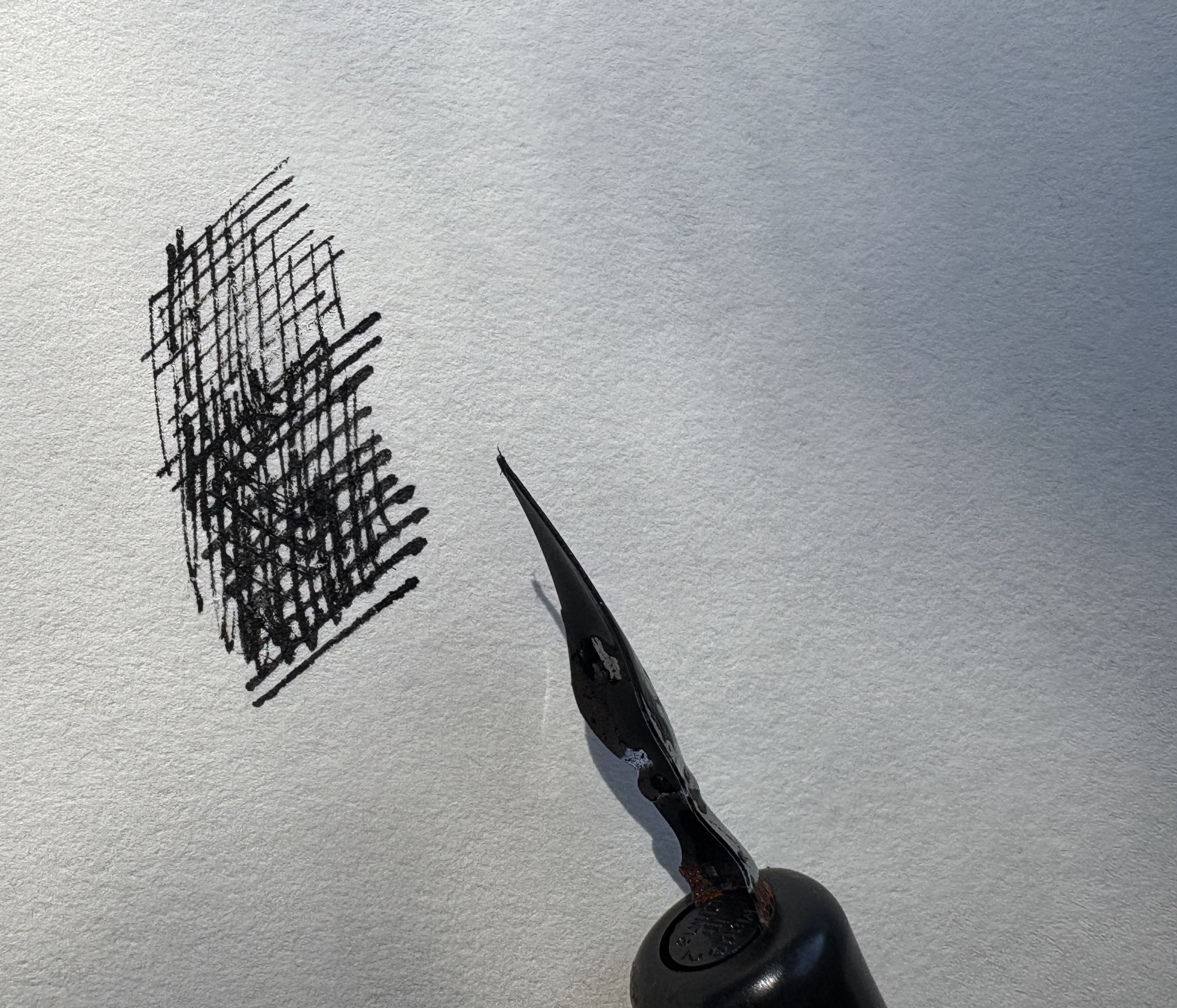
When shadows and degradations in shading are desired, two techniques can be employed. With hatching, shadows and tone are indicated by lines close together and drawn in same direction. The closer the lines are bunched together, the heavier the shadow area appears. Similarly, cross-hatching creates shadows using lines that crisscross from opposite directions.
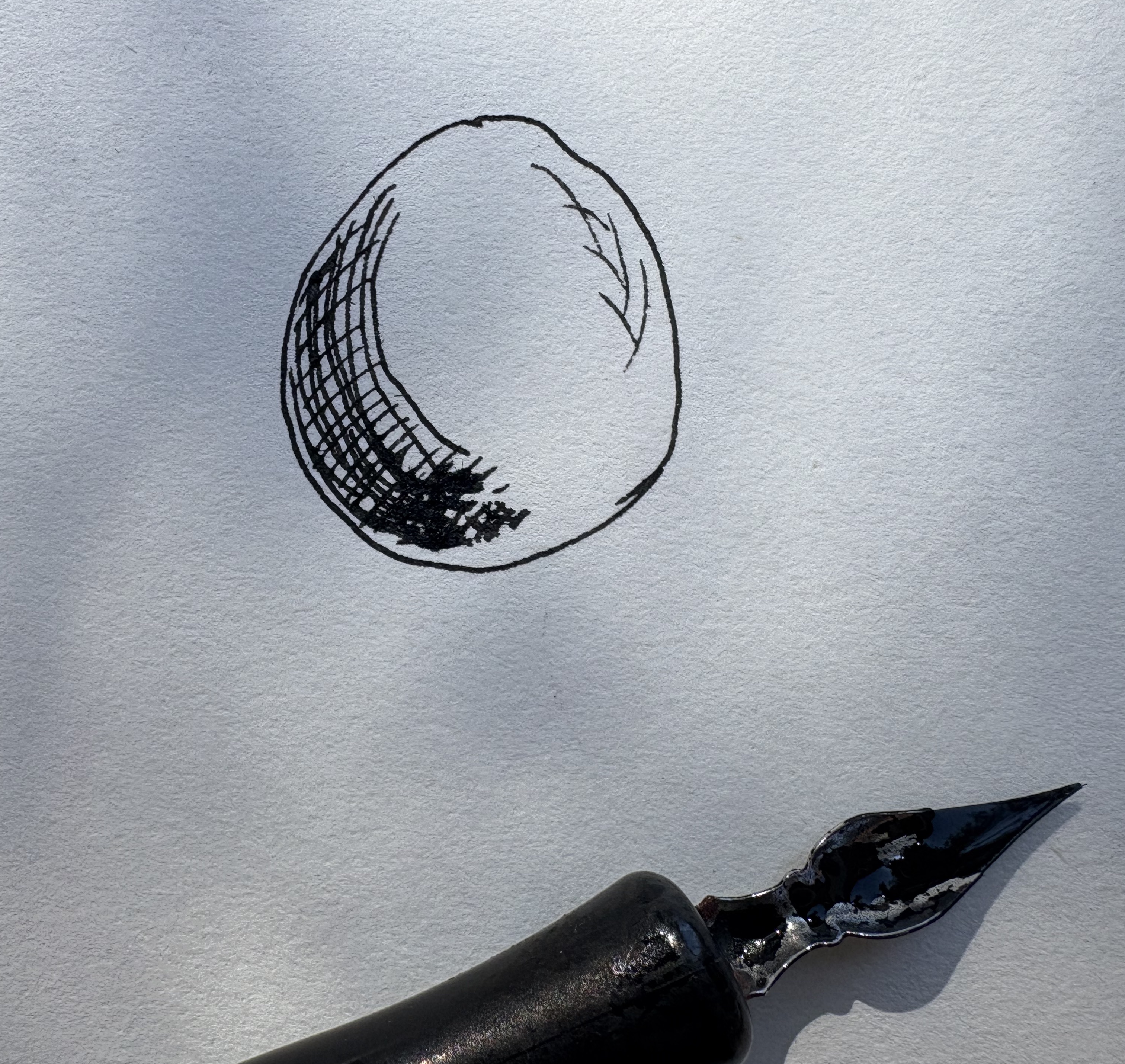
Finally, in the most complex but realistic rendering of tone, shade, and shadow, contour hatching can be applied. Contour hatching involves cross-hatching with lines following the shapes of the subject’s surface.