Pastels
Pastels are a time-honored medium dating back to the Renaissance.
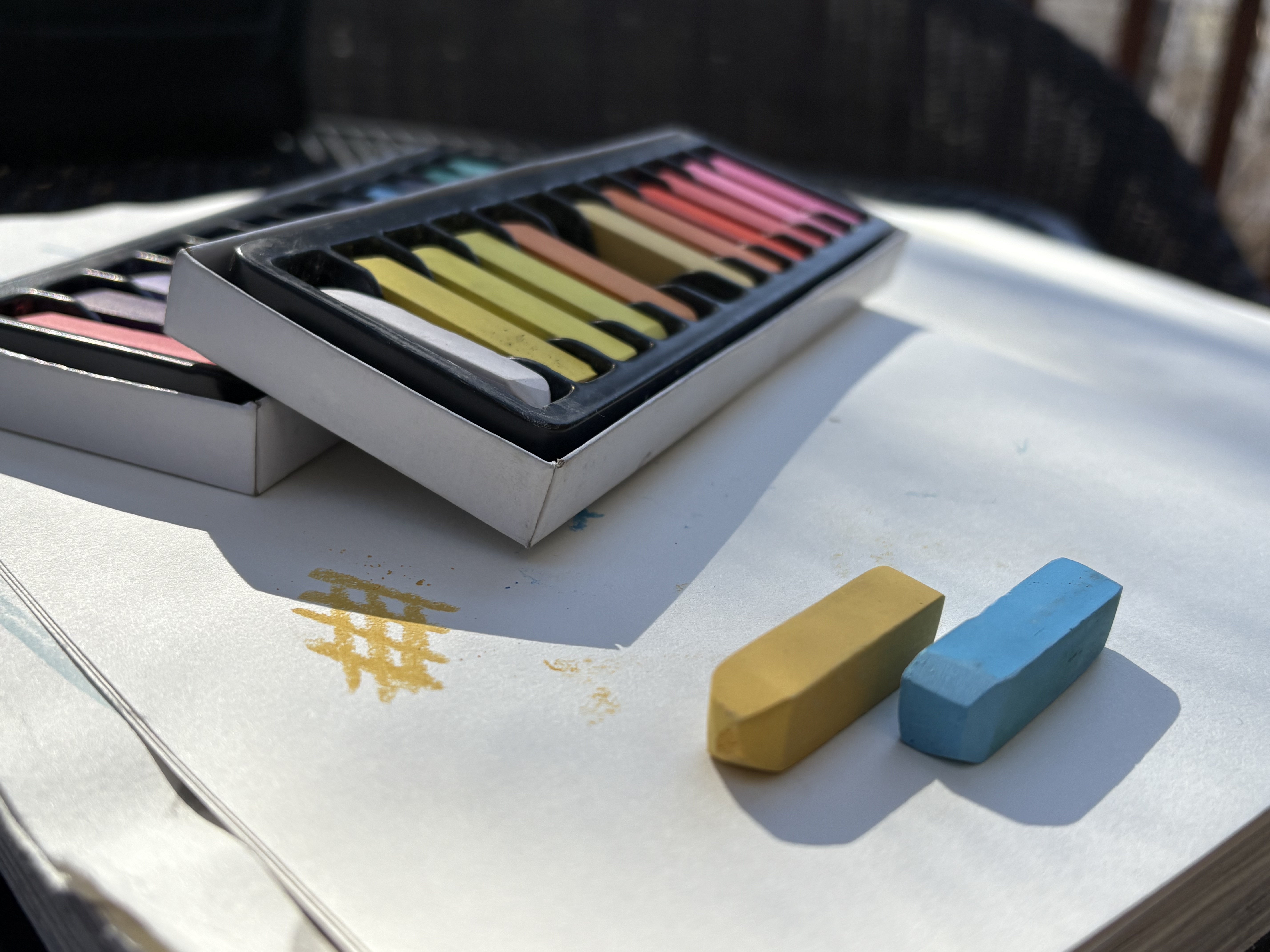
A soft, chalk-like medium, pastels are very versatile for a variety of styles, from loose sketches to soft impressionist renderings to detailed portraits.
The chief traits of pastels are their vivid colors which don’t dull when the pigment is spread out, the way transparent paints do, and their ability to blend to smooth swatches across the page. Pastels work best on a vellum paper with some tooth to catch the pigments. When working with pastels or any soft pigment medium, it is recommended to spray a fixative over the finished product, or even over individual layers, to hold the pigments in place.
Techniques
Some common pastel techniques:
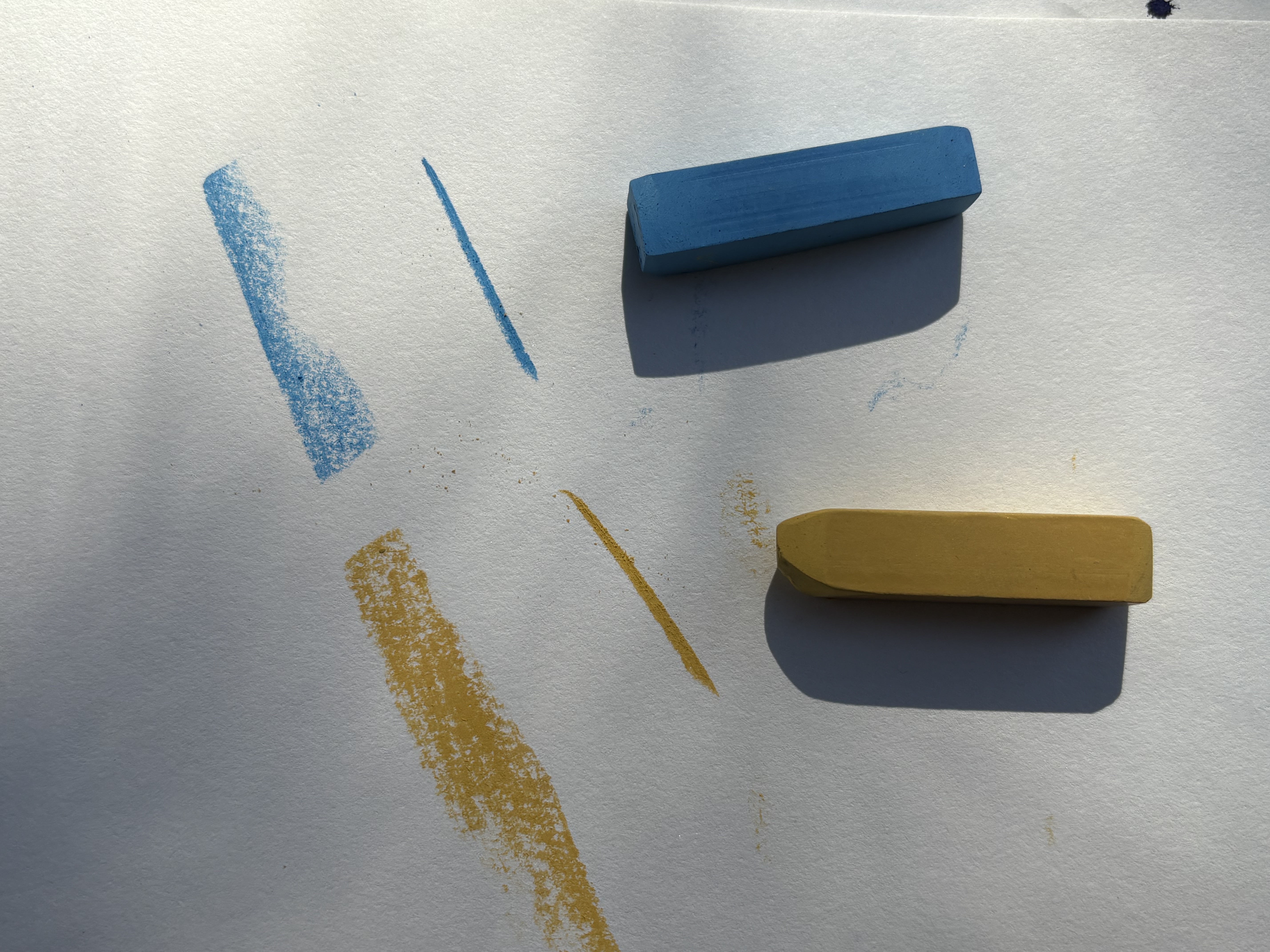
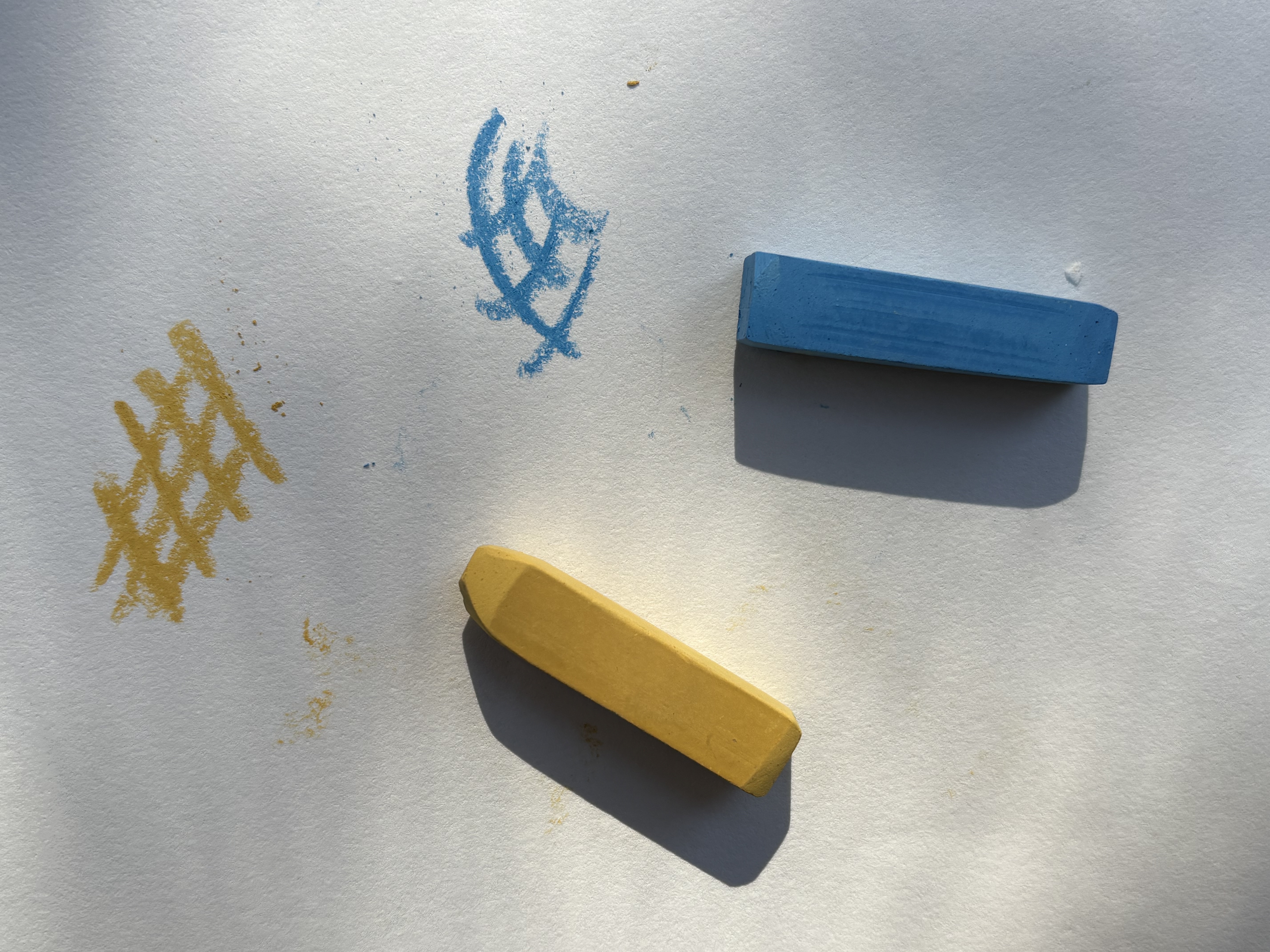
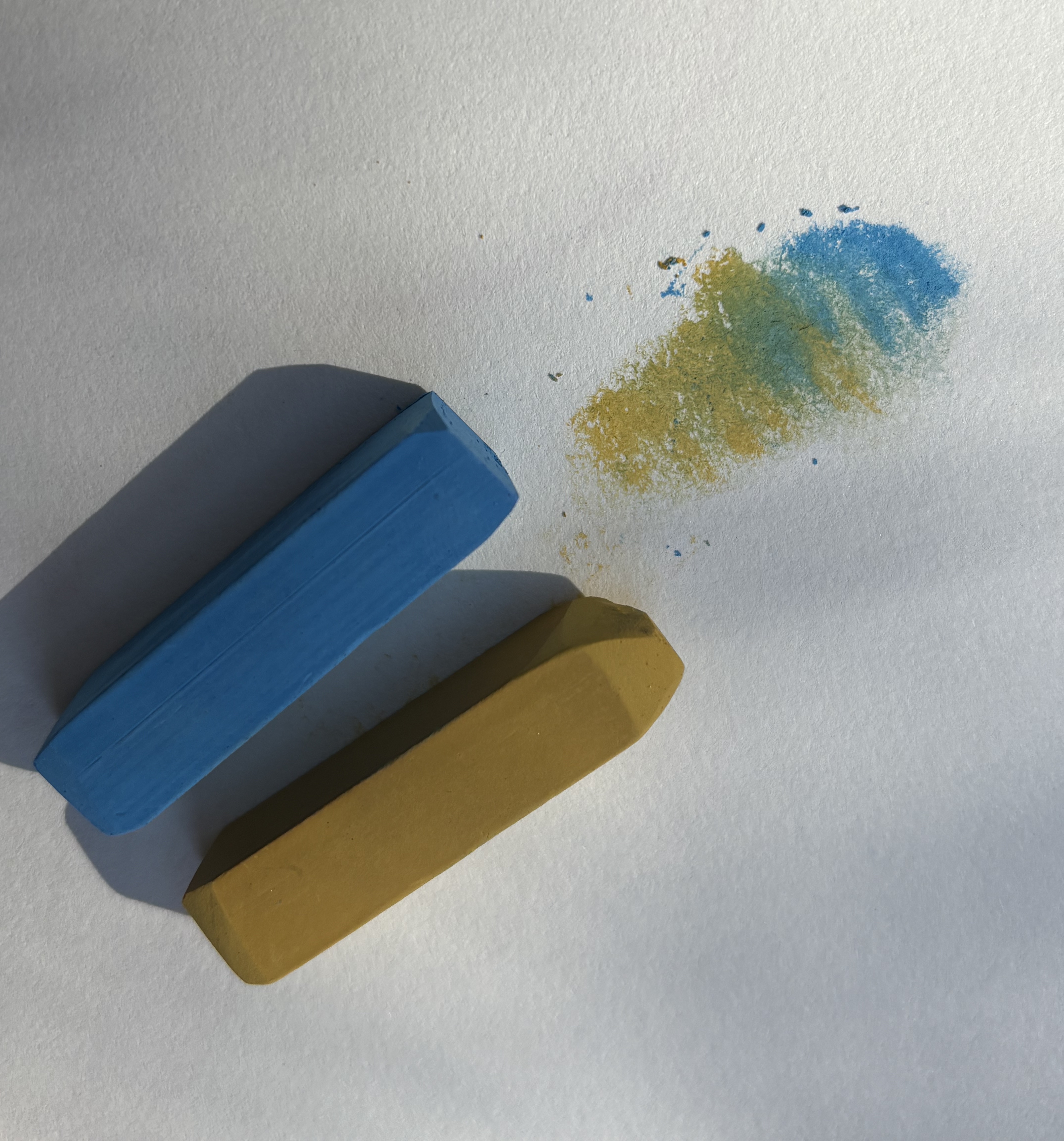
Pastels can be used in a variety of styles. Some of the basic techniques include: lines, cross-hatching, scrambling, and blending.
Due to their soft nature and rectangular shape, a pastel stick can be used to create varying line weights. Similar to pencils, they can be used to cross-hatch areas of shadow, wherein lines will be made to crisscross in narrowing degrees to indicate darkening shadow.
Scrumbling is a technique wherein the pigments can be smoothed and stretched across the page with either a paper tortillon or even the artist’s fingers. Another technique along the same lines as scrumbling is blending, where more than one pigment can be scrumbling over each other to create a new color.