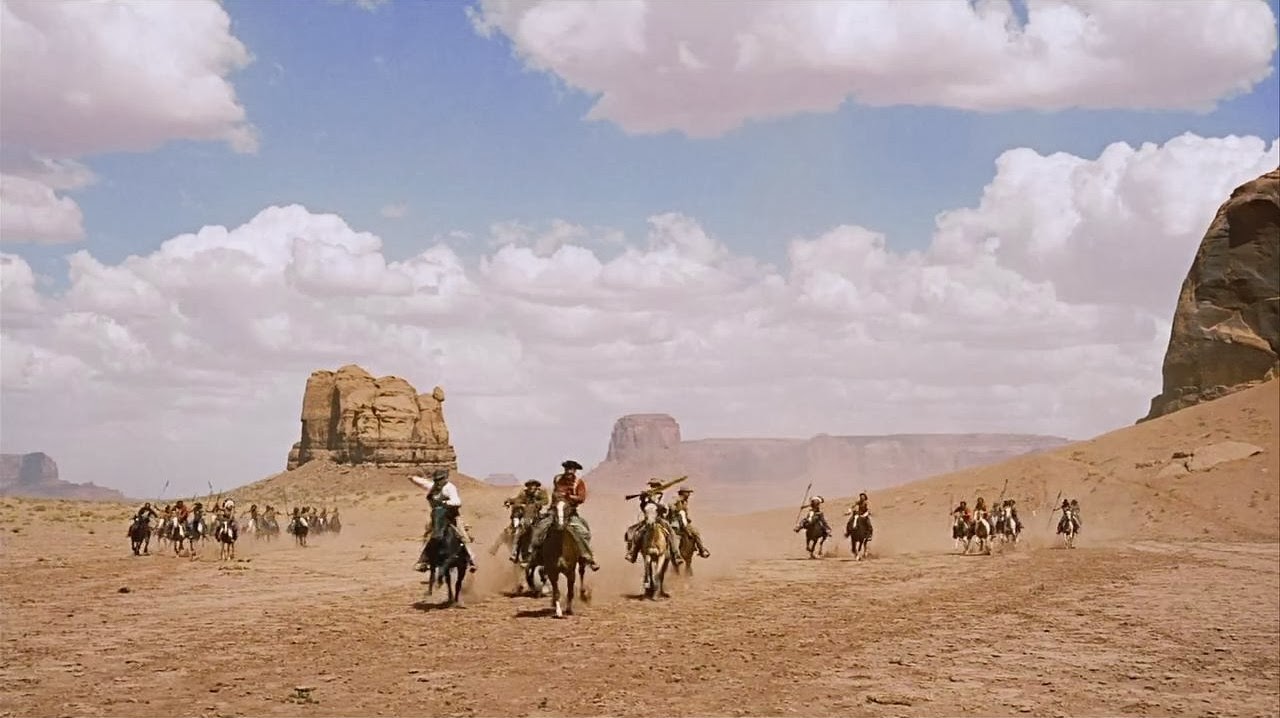
Westerns
Big History
The dust of a thousand miles cakes your spurs as you swing off your trusty horse and gaze down a sun-bleached mountain at the sprawling ranch your family once called home. But it’s all as parched as the desert now, and carved up among despicable cattle baron’s minions. The land ought to be yours by birthright, but you’d rather die than beg for what’s rightfully yours already. Besides, that old baron won’t share, and his gunmen are already on the stagecoach, heading your way.
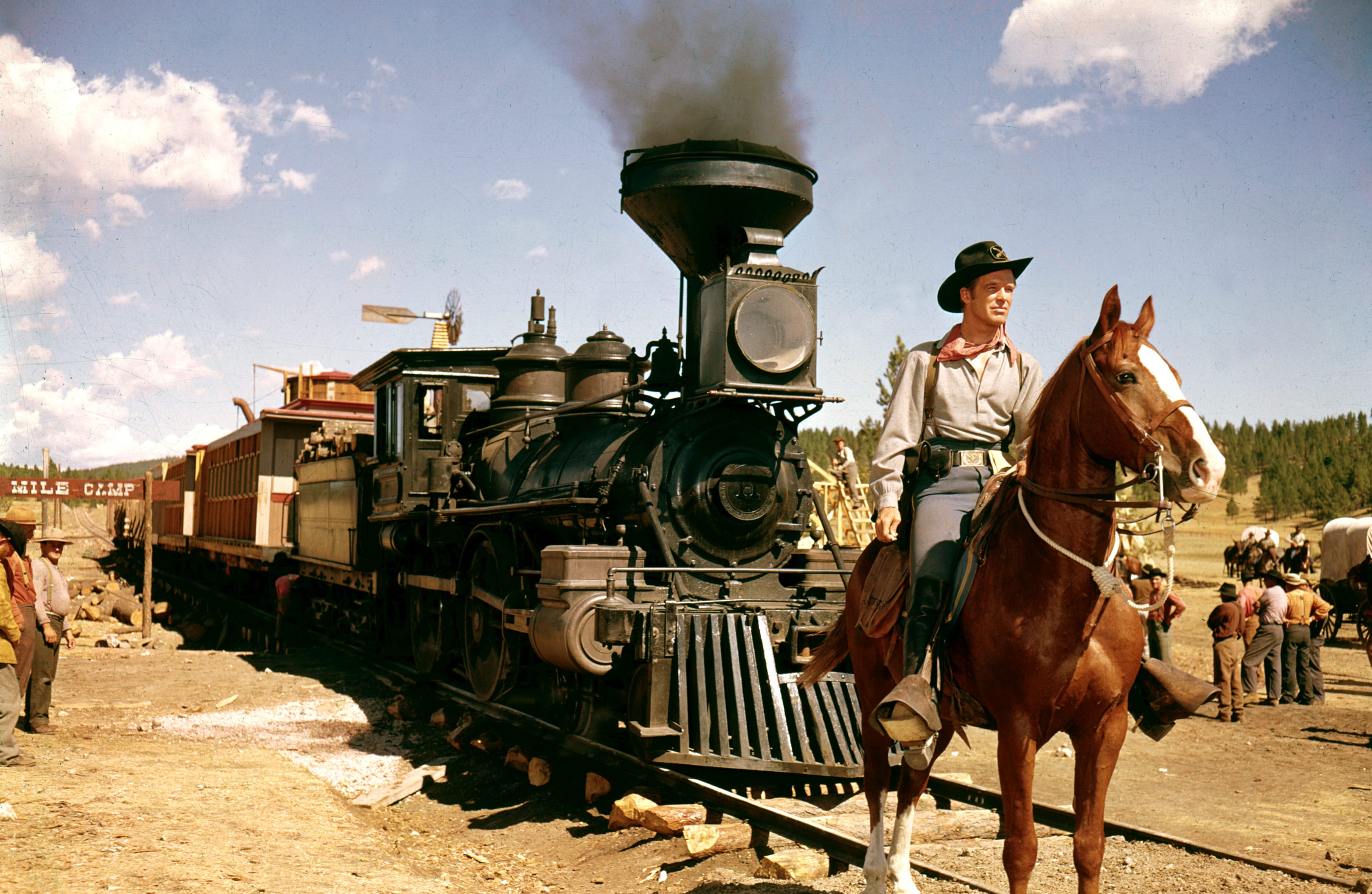
The Purity of Heroes, Villains, and American Freedom
The Western is considered the most quintessentially American genre. These films speak to America’s past, to a sense of rugged individualism, and freedom to live as one pleases amid the beauty and harshness of civilization’s edge. The stories often center around a lead character who stands as the moral center to an only partially-civilized land, be it a sheriff in a small town or a drifter in a corrupt mining town. The sense of mythology often overtakes period realities so that the movies seem to exist in a dreamlike version of early America, partially rendered with gritty realism (remember that in the 1940s and before, some of the cast and crew had actually been alive during the periods depicted), and partially in an idealized world of what may or could have been.
Style and Influences
The Western was a well-established genre in literature, mostly in some-novel pulps, before the advent of cinema, even though the era it depicted was, at the time, the relatively recent past. The first narrative film is generally considered to be The Great Train Robbery (1903), a Western. So this genre cemented itself as essential to the movies right out of the gate for the new medium.
The Western is a malleable genre, with a wide range of styles and approaches. The classic “oater” subgenre includes melodramatic, romanticized storylines against expansive, sweeping backdrops of cattle drives and uncharted settlements in the western wilderness. Other Westerns take place within the closer quarters of small, one-street towns and emphasize suspense or thriller storylines within the standard genre conventions.
Problematic Frontier
More modern Westerns have used the medium to deconstruct its earlier mythology, adding realism and social commentary to emphasize the failures and shortcomings of the medium. There have undeniably been strains of racism and sexism throughout the history of Western cinema and literature, often depicting white men as heroes and indigenous people and people of color as de facto villains, and more often portrayed as unintelligent and mindlessly violent. Likewise, women in classic Western cinema are portrayed as love interests, whose presence is only there to shower the white male leads with affection and occasionally find themselves helpless in danger. Like our discussion for film noir, it is worth noting that these shortcomings reflected the larger shortcomings and acceptances of society at the time, which will justifiably turn some modern audience members off. But it is also worth appreciating the artistic contributions of these films, even though the stain of patriarchal 20th century society is surely upon most of them.